


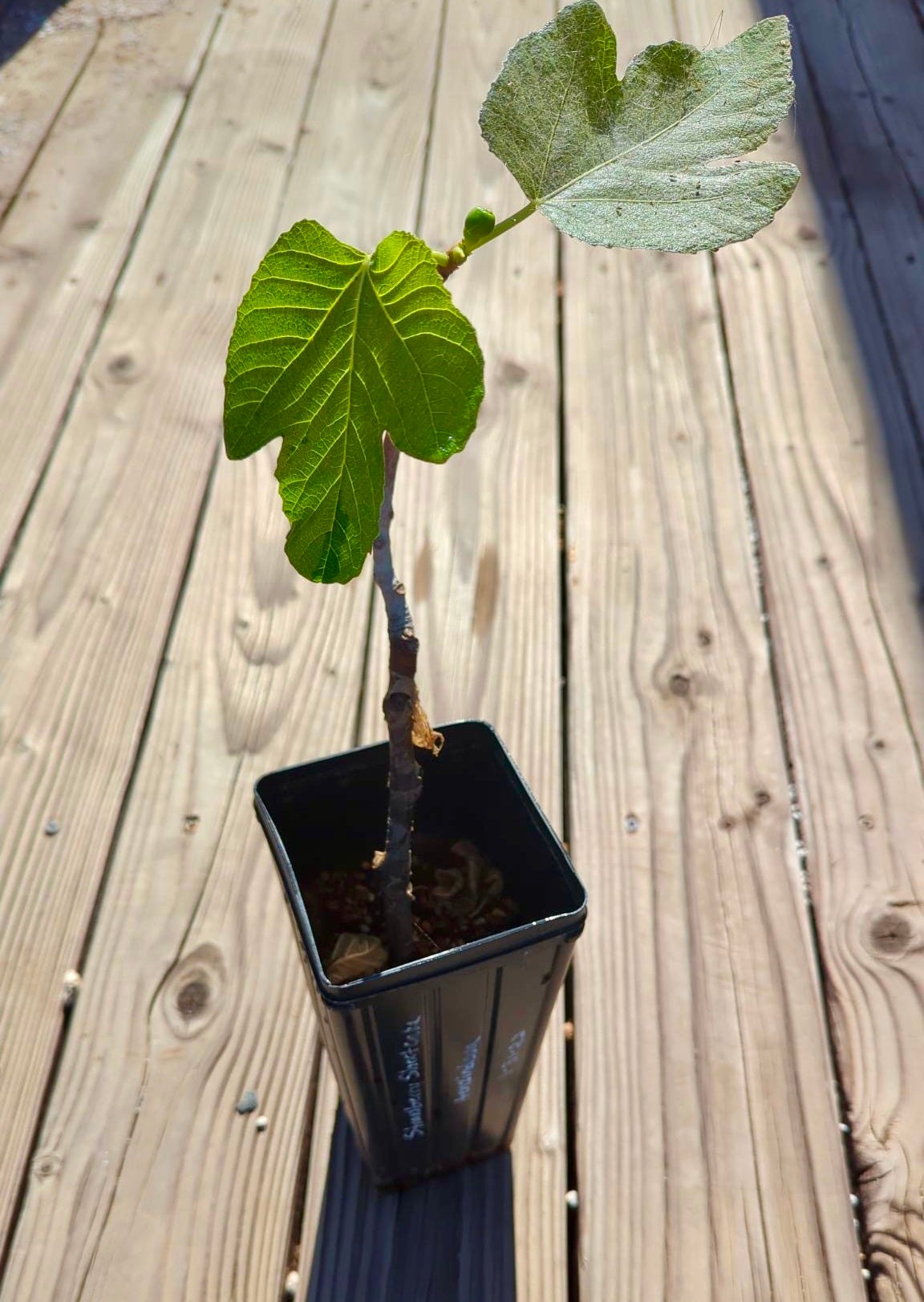
You have a new fig tree? That is fantastic! Welcome to the wonderful world of figs; you are about to embark on a delightful journey for your tastebuds. Nothing compares to a fresh, tree-ripened fig from a tree you’re growing yourself. So, what now? How do we take care of the little gal?
Fig trees can do very well both potted and in the ground, so I’ve included information for both in this article.
One thing every fig tree needs that is not mentioned below (because, yo, it’s a single sentence) is a good name tag! Don’t forget this one if you get into collecting or wish to share cuttings.
If anything is going to make something very simple sound overly complicated — it’s an article or a video. So don’t let the number of words, sentences, and paragraphs scare you. Taking care of fig trees is incredibly simple and doesn’t require much time at all. It’s basic gardening 101, but I’ve spelled things out a little bit for those who need a few more details, after all, these are fruit trees and not veggies.
Now onto the things…
The Basics
Your new tree is going to need:
A temporary rest period if shipped
A larger pot
Potting mix
Water
Sunlight
Fertilizer
Pruning
(Note: There are some links below for your convenience; none are affiliates. I do not benefit from your clicking them.)
Rest and recovery from shipping
If your new tree was shipped to you, it has gone through a lot! It needs about a week or so to recover. Unpack your tree from the box, give it some water, and either keep it in the house or put it in a shady spot outside to rest. Do not up-pot it or do anything else that could further stress it during this time.
Keep in mind that the seller may have grown these trees indoors or in a greenhouse, so they may not be properly acclimated to full sunlight yet. Because it has been in complete darkness in a box, it will need a moment to get used to light again anyways. This is in part why we keep it in the house or in the shade for a short time. Gradually expose it to more sunlight after a week and see how it does. There also may be a humidity adjustment for the tree.
Also keep in mind that some will sell fig trees before they are ready to be up-potted. So you may need to wait a couple of months before it is ready for a new pot. To check, very gently raise the plant up out of the pot about halfway to see if there are a lot of roots. Do not take it out too far because if there are not enough roots, all of the potting mix will collapse and fall apart which can harm any roots. If you do not see very many roots yet, keep it in its original pot a while longer.
Fig trees are very resilient so if your tree arrived looking a little battered, do not give up, it likely will bounce back in short order.
Pots and Potting Up
Most fig trees come in what is called a “treepot”, which is a tall, narrow pot designed for root growth. Sometimes, they’ll come in smaller round pots. A fig tree can stay alive for many years in a treepot, however, it will not grow or fruit very much as long as it is in a small container. To get more figs, we need to up-pot.
If your fig tree is going to live in a pot, you will want to choose one that has good drainage and that is an adequate size for a fruit tree. Consider if you will have to move your trees a lot or store them for the winter when choosing a pot as this can affect the size and any stackability features. A fig tree needs a minimum of a 5-gallon pot in my opinion. A 5-gallon pot will allow it to give a small but decent amount of fruit to try any variety. Most trees in 3-gallon pots or smaller do not produce very much. A 15- to 25-gallon pot is probably most ideal for any fruit tree, however, these are harder to move around because of their size and weight. If the tree is going to stay mostly in one spot, I would definitely choose this larger size. If the tree needs to be moved into storage every winter, I would choose 7 gallons.
It is usually better to up-pot your trees in incremental pot sizes. I go from a treepot to a 5-7 gallon pot usually, and then from these up-pot to the preferred larger size if needed. The minimum size to up-pot from a treepot is 3-gallons.
These are some of the top pot recommendations I have seen if you are looking for suggestions:
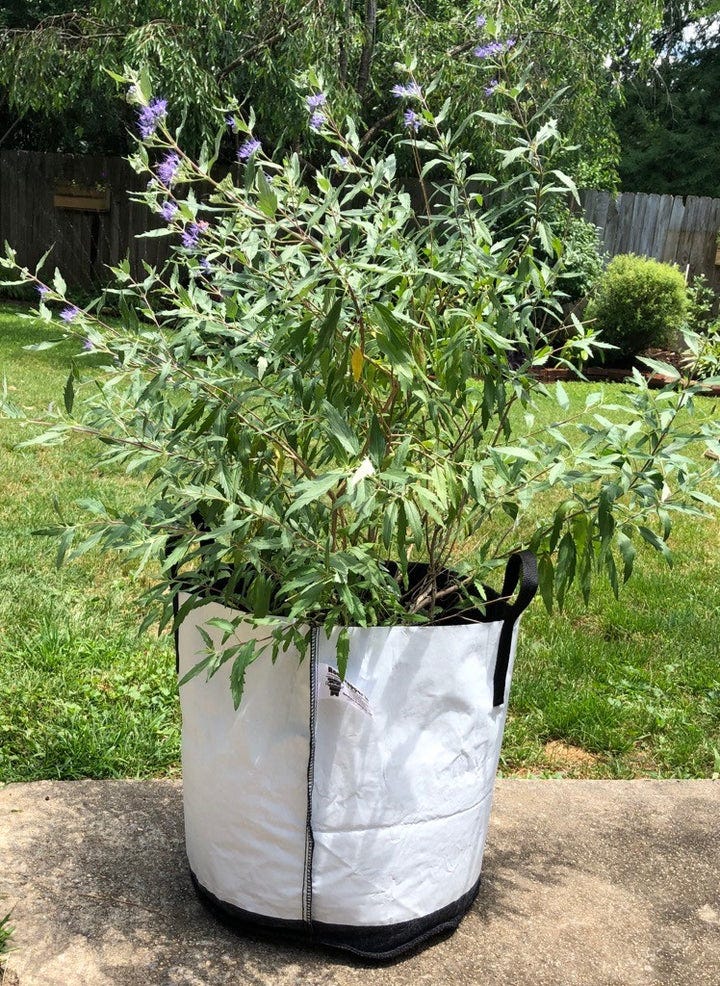
These are my favorite pots!
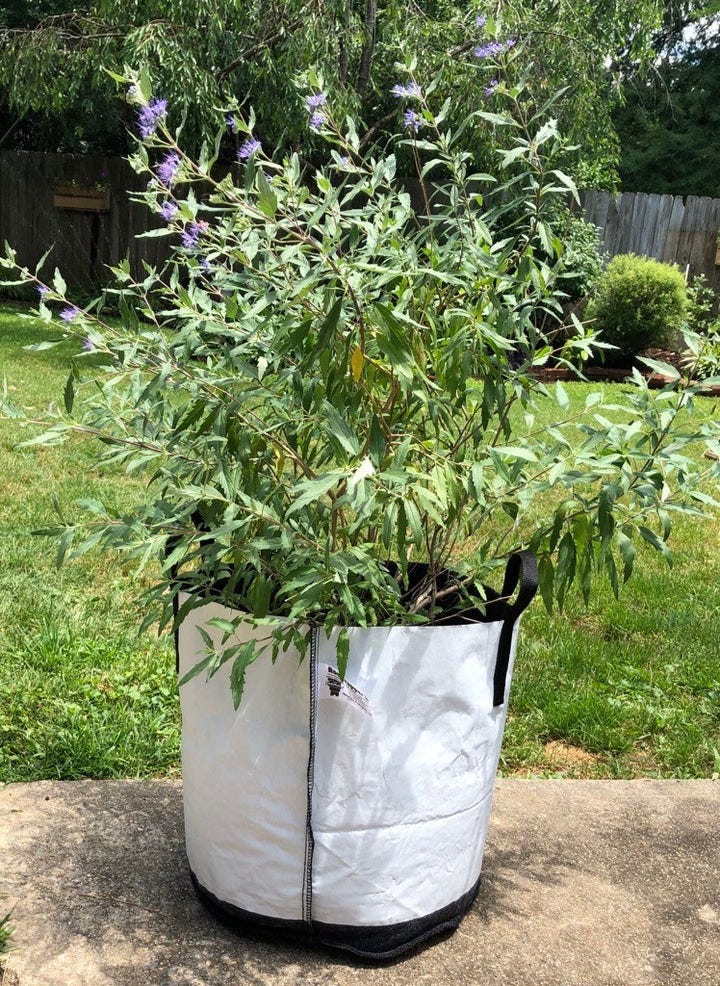
PROS: They combine the benefits of a fabric and plastic pot. So you get good air flow to the roots, but water does not evaporate too quickly like what can happen in other fabric pots. You may not need to root prune as often with them. Roots do not typically circle in these pots as they do in plastic pots. I also like that there are no drainage holes in these so you do not lose potting mix from them. They also are in true gallon sizes. They come in a large range of sizes. My trees do very well in them and I think they are great for the long term.
CONS: They can be harder to move around, though the handled ones are easier. It is harder to remove the plant from these pots, so do not use these if you are planning to up-pot again soon. I have had a minor issue with rodents wanting to chew on the fabric, though this happened on two pots out of a couple hundred, so not too bad. Roots can come through the mesh area at the bottom and will root into the ground if these are placed on dirt. It is an easy fix to just pick up and rotate the pots a few times a season if needed. Hungry gophers can eat holes through the bottom of the pots if these are placed on dirt.
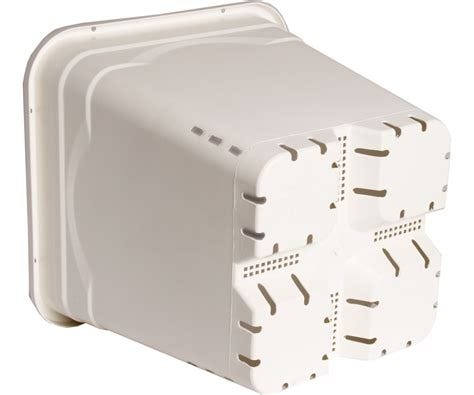
These are my 2nd favorite pots! I like to use these pots before I pot my trees into their more permanent Rootmaker pots. * It is best to do an internet search for these pots to see which site has the lower cost for shipping in your area. They are sold on quite a few sites. These can also be found at some local hydroponics stores.
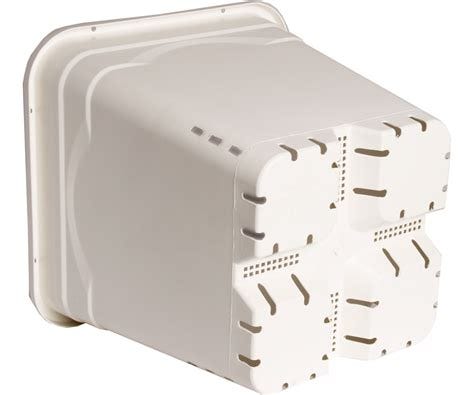
PROS: These have all of the benefits of a plastic pot, they are easy to remove the plant from. They have additional drainage or air holes towards the bottom which help with root health. They are square shaped which makes them easier to stack or store. They come in both white or black colors. Because I am in a hot climate, I get the white pots to help keep roots cooler. These white pots have lasted me for years in full sun unlike some other brands which fell apart after one or two seasons. The 12x12 pots are equivalent to a 5 gallon pot, and the 9x9 to a 3 gallon pot.
CONS: They only go up to 5-gallons in size. Like with any pot with drain holes, a certain amount of your potting mix will come out any time you water. You can get root circling in plastic pots, and so the tree will need to be root pruned every couple of years. Roots can grow through the drain holes into whatever is underneath if it’s permeable, including weed cloth or gravel.
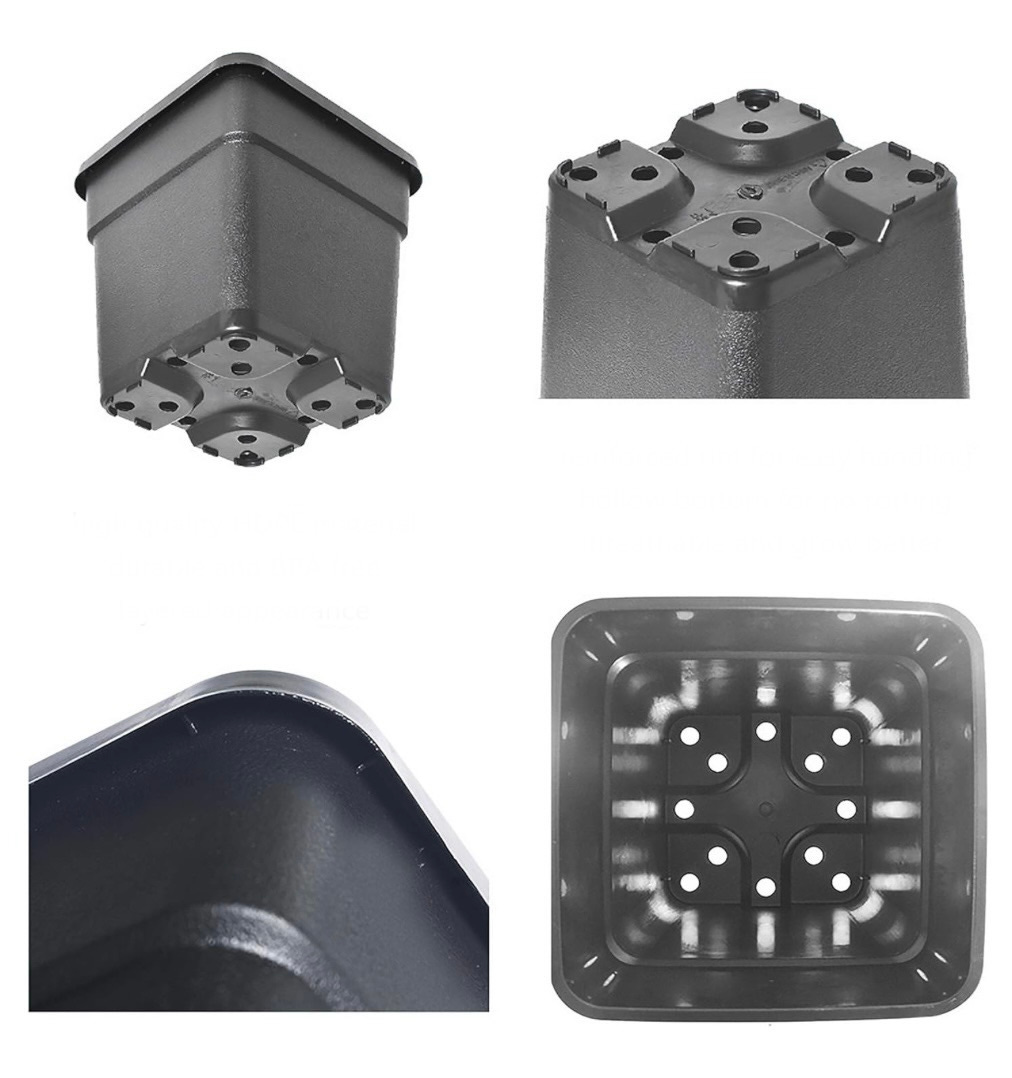
These were first recommended to my knowledge by a fig grower on the forums named Kevin (aka Ktrain). So give a shout out to him if you like these pots.
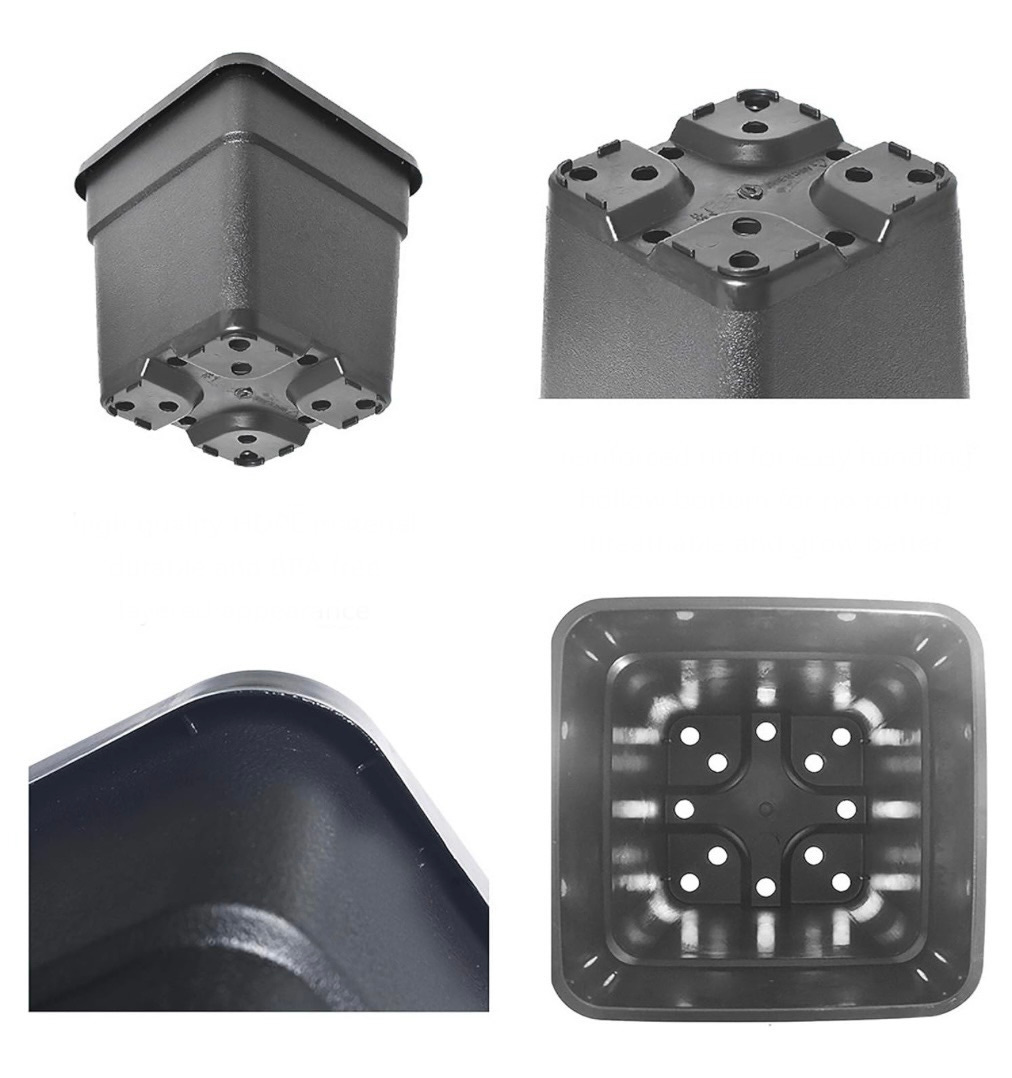
PROS: They come in multiple sizes up to 10 gallons. Many like the square shape for when storing their trees for winter as they fit together tightly and neatly. These are a step up from regular nursery containers and have good drainage. They also come in both white and black, though I don’t know the durability of the white ones.
CONS: You can lose potting mix through the drain holes. Roots can grow through the drain holes if placed on something permeable. Trees will have root circling in these and need to be root pruned every 2-3 years.
Nursery pots
You can get good deals by going to a local plant nursery or landscaper and asking them about their used pots. Frequently you can get an amount in bulk for a reduced price, some have even gotten pots for free. These come in all sorts of sizes.
PROS: Good prices usually. A range of sizes can be available. Easy to up-pot or repot from.
CONS: Drainage is poor in these, so make sure to use an adequately aerated potting mix. The black color can get too hot for the roots when growing in warmer climates. You can lose a certain amount of potting mix through the drainage holes. You will get root circling and will need to root prune every 2-3 years.
Other decorative pots
These can work as well but can have problems with drainage. Always check that there is adequate drainage. Single drainage hole pots do not drain as effectively as pots with multiple holes. Make sure materials are non-toxic since figs are grown for food. All pots have their pros and cons as noted above. When choosing a decorative pot, you will need to go by your own personal needs and preferences.
It can be helpful to top your pots off with a mulch to help moderate soil temperature, retain moisture, and to prevent weed growth. Bark, wood chips, gravel, oyster shells, and the like all work well for mulch.
Note that when potting up from a round container, you will probably need to gently tease out the roots a little bit to get them out of a circular shape. This is so that the roots will spread out in the new pot and not remain circled. This is not necessary when potting up from a treepot.
Potting Mix
Choose a mix made for trees, not vegetables or flowers. Vegetable mixes are often too fine, contain a lot of fertility for fast-growing single-season plants, and may not last beyond one season. Tree mixes usually have better aeration, which is needed for root health for plants growing long-term in a mix. I recommend getting something made for citrus, palm, or other trees; cactus mix can also do in a pinch. The only caveat is that sometimes these mixes start out very aerated and so can require more watering.
I also have a couple of articles that discuss how to make your own long-lasting potting mix which I will link here:

Rooting Mixes Broken Down

It all starts with the rooting mix to facilitate healthy growth. Rooting mixes are the growing medium used to propagate fig cuttings in pots. It can mean success or failure for your cuttings to grow into healthy plants. Excess water is often blamed for cuttings rotting, but really it isn’t the water at all— It is the lack of oxygen that causes tissue de…
Back to this article…
Watering
Watering is based on the individual tree’s needs. The more roots that fill the pot, the more it will need water. So a rootbound tree in a treepot may need to be watered multiple times a week, even every day in hot weather. However, after up-potting to a 7-gallon pot it will need less water because it is no longer rootbound and there is more soil to retain moisture.
Figure on watering your tree twice a week at first while it is actively growing. As the season progresses and it gets hotter, you may need to water more frequently. Your tree will tell you if it is unhappy through its leaves. Too much or too little water will cause drooping, yellowing, and even leaf loss. If your potting mix is moist and you are having leaf issues, it’s likely it is being watered too frequently. If the potting mix is dry and you’re having leaf issues, it likely needs to be watered more often. So stick your finger down into the mix to check moisture if having any issues.
Fig trees are hardy and can bounce back from a temporary watering issue, but it is likely to affect fruiting and growth in that same season. So if your tree has lost leaves, don’t panic! They often can come back after a little time. (Don’t ask me how I know or how often I have found this to be true. 😳 Just know that I know… very well. Haha!)
I only recommend water trays when the weather is hot enough that you may need the extra water and it can evaporate away before the next watering. Fig roots do not like to sit in water for long periods of time. This causes water logged soils which depletes oxygen and can cause root rot if it stays constantly wet for a length of time. So use water trays with caution, especially if in a rainy area.
Usually, I am watering my potted older trees in full sun every day when in the hottest part of summer. My younger trees in shady areas can get away with being watered 2-3 times a week during the same time.
Setting my trees up on automated irrigation has been very helpful to me and I definitely recommend it if you have more than a few trees. I use the Primerus Spot Spitters with a drip system timer and like them very much for my potted trees.
Sunlight
Fig trees normally prefer full sun. There can be exceptions to this, such as if you are in a hot climate area or if your tree is young.
Those in hot climate areas may need to do something to deflect sunlight away from pots to protect the roots from heat, such as by painting the pots white, or using something to cover the pots such as burlap or silver reflective bubble wrap type material.
Young trees can struggle in full sun but often do better in their 2nd to 3rd year of growth. A partly sunny spot may be better at first until it is acclimated to full sun, especially if in a hot climate area.
Fig trees do not do as well in areas with limited light. You will often see tall growth and wide leaves on them as they are looking for sunlight. Also, fig fruits may not taste as good when ripened in shade or cooler spots.
Fertilizing
Your tree is going to need nutrients to thrive, especially if keeping it in a pot which is an isolated environment. Fig trees technically can live without any fertilizer for quite a long time. I have some trees that are six years old, still in treepots, that do not receive any fertilizer whatsoever and they are doing fine. Fine meaning they are still alive, grow leaves, and are green. But in order to optimize your tree’s health and to increase the amount it produces, you will need to fertilize periodically.
You all know I am a natural farming type grower, so my preference is for natural inputs. You can read a variety of articles here on making your own natural inputs if you like. But basically, a fig tree only needs fish hydrolysate, seaweed, and a calcium product like gypsum to grow well and these are what I recommend. If you prefer a one and done type commercial product, look at fertilizers meant for tomatoes. These often can work well for fig trees.
Fig trees primarily need calcium, potassium, nitrogen, and magnesium in this order. They have very low requirements for phosphorus and that requirement is in early spring. They do need a certain amount of micronutrients as well. So keep this in mind when choosing a fertilizer.
Fig trees in general have very low needs for fertility, so do not over-fertilize your trees. They can get stuck in vegetative growth mode when too much nitrogen is applied and they are sensitive to overages. They need just enough to keep things healthy so consider fertilizing just once or twice a month when maintaining your trees in a pot.
You can also top your pots with a good compost or granular fertilizer if you desire.
Pruning
Main crop fig fruits grow on the current year’s growth. A potted fig can only grow so much because the rootball is kept small due to the pot. Because of this, we usually need to prune fig trees once a year after dormancy so that they can grow more the next season and produce fruit. I like to prune mine right before they wake up in late winter/early spring; others need to prune in the fall so that they can store their trees for winter.
(Note that the suggestions that follow are for pruning for main crop figs. If pruning for breba, you will require some differences, such as pruning every other branch and rotating which branches are pruned each year.)
When pruning, cut off branches that cross into each other. Also eliminate any excess branches growing in the same direction that are too close together for air flow. Any dead or low-growing branches should be removed. Cut the remaining branches so that at least 3-4 nodes with buds remain. If you have problems with winter dieback, you may want to leave them a little longer to allow for that.
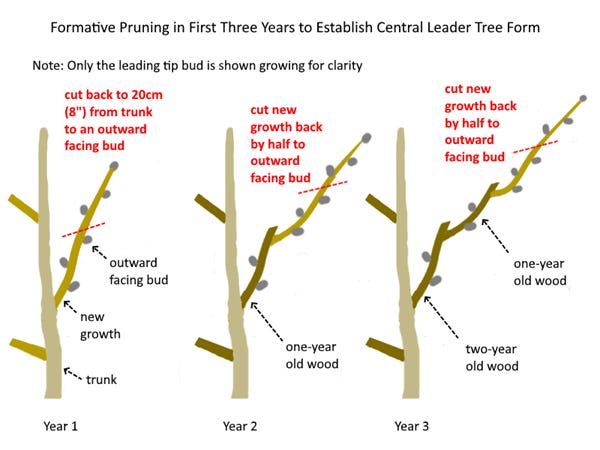
When doing your main scaffold formation, make sure to stagger the branches to balance weight and to not create weak junctions by allowing multiple branches to grow out from the same spot as indicated below:
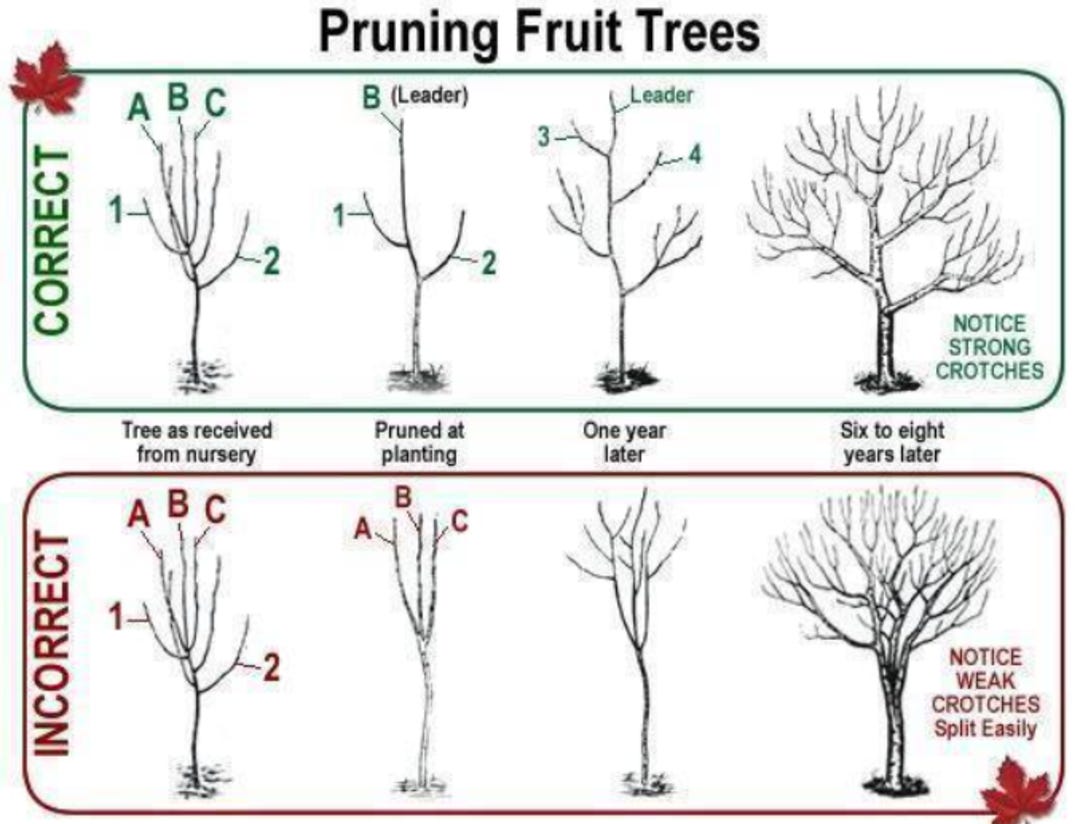
An interesting thing about fig trees is that they can grow as multi-trunked trees. When allowed to grow on their own, they sometimes choose this pattern and look like big bushes. This can also happen if you live in an area where you get winter dieback. The tree puts out additional shoots in order to survive and to provide more areas for photosynthesis to keep the roots alive and healthy. It is up to you if you choose to grow your fig tree as a multi-trunk tree or as a single-trunk tree. Some really want that pristine tree form, and that’s okay! Though sometimes it is easier to let nature do its thing, and if you have a tree persisting in trying to form multiple trunks, especially in a colder area, that can be more desirable than a bunch of cut-off shoots coming out everywhere. It could be an indication that the tree is struggling with a single trunk.
Growing your fig tree in-ground
If you are in an area where you can grow your fig trees in the ground— that is awesome! In-ground trees typically are so much healthier and produce higher quality fruit than potted trees. Fig trees can do well in a variety of soils and usually the only thing that adjusts based on soil type is the frequency of watering.
Figs are rated for growing zones 7-11. They can survive for short periods down to 15°F when already dormant, but anything below 20°F will likely cause damage. So if you are a zone pushing grower, just be aware that you will need to provide winter protection in order for your tree to survive winter.
When to plant in-ground?
Note when your first frost date is for when you choose to plant. You will want enough time for the tree to have grown a bit and to become established before the first frost hits. This is even more important when growing in colder winter areas and it takes a minimum of a couple of months. Try to plant in spring after the last frost when possible. This allows the tree to adjust to its new home in milder weather and it can grow and establish itself long before winter comes. There are workarounds for planting later in the season to compensate for the hotter sun, such as by using shade cloth. At some locations with mild winters, you can plant year-round with little issue. Timing mostly has a bearing in places with colder winters or in places with harsh sunlight.
In my opinion, it is better to wait to plant a tree in-ground until it is about 5-gallon sized. It should have adequate roots and acclimation at this size to transition to in-ground well. This is not a requirement. I know other growers that will go directly to in-ground from a treepot. It’s just that these can require more “babying” and care for the first year or so, which is why I prefer the larger size.
If you are in a zone pushing area, it is necessary to have the tree already be of a good size before going in-ground so that it is strong enough to survive from any dieback over winter.
Protection from elements
If the spot you are planting in is in full sun, you likely will need to provide some shade for a while until the tree adjusts. You can do this with something like a large trash can positioned to shade the tree, or you can prop up a piece of shade cloth over it by using a few stakes and ties, along with other methods.
Soil type
If you have clay soil, you will need to water less. If you have sandy soil, you will need to water more. I do not recommend amending the soil around the roots to adjust for these different conditions. It has been found that doing so often can negatively impact the roots and the growth of the tree. You want very little organic matter around the roots when growing in clay soil because it does not have the air exposure to keep roots healthy. The organic matter cannot break down properly when it is in clay soil and may create toxins instead for a period of time due to the lack of oxygen. So it is better to use non-organic materials instead to modify clay soil around the roots, such as gravel or pumice. Sand mixed with clay can create an almost concrete like situation and so is not recommended.
It is better to modify soil conditions by keeping organic matter on top of the soil and using biological inputs. Microbes can do a great job improving soil quality and I recommend JADAM microbial solution as a primary way of improving soil health. A biologically rich compost applied to the top of the soil in the tree’s water line and then topped with wood chips is a great way to fertilize in-ground trees while helping to improve soil quality.
Watering
How often you water will depend on your soil type and the weather. I live in a hot, dry climate with very little rain. We water our in-ground trees deeply about once a week starting at wakeup in spring. We will water more often during heat waves or if the trees seem to need it. Rarely are we watering more than two or three times a week at the hottest of times. My trees are mulched and we have gravel loam soil, if that tells you anything. 🙂
Sandy soil will require more frequent waterings; clay soil will need less. Let your tree tell you what it needs, if leaves are drooping more than usual, something is off with the water one way or another.
Keep in mind that the root ball is very small when it is first planted in the ground, it’s literally the size of the pot it came in at this stage. So you will need to water directly to that area until it has grown more and when that small area has dried out, it will need more water.
Fertilizer and growth
The only fertilization in-ground fig trees need is calcium, if your soil is deficient, and some compost and/or wood chips applied on top of the soil. Chemical fertilizers are not necessary or required for in-ground fig trees. It is more about feeding the soil microbes and soil health when growing in-ground. If you feel the need to provide more, try to stick with natural fertilizers such as fish hydrolysate or compost teas as these will help build the microbial networks healthy trees need.
Sandy soil has a hard time retaining nutrients and clay soil has a hard time providing air for root health so that the roots can absorb nutrients. Applying the microbial amendments along with topping the soil with compost and wood chips will help to correct both situations over time. In the meantime though, foliar feeding can be a great boost to the tree’s health to ensure it is getting adequate nutrients.
I feel like I’m repeatedly typing “keep in mind” in this article 🤪, but another keep in mind is that in-ground fruit trees can seem as if they are growing slower at first than their potted counterparts. The reason for this is that it takes a hot moment for a tree to adjust to its new environment. It is adjusting its root exudates to the type of soil it is in, it is building up microbial networks so it can feed itself, it is adapting to the water and air in the soil, along with adapting itself to whatever is going on above ground. It is going to focus on root growth at first and expanding out its previously cramped root system both for stability and to support top growth. Once it stabilizes, it will take off in growth according to what is natural to it. Growth can depend on the variety as well, how tight the soil is, and whether or not moisture levels are appropriate.
Spacing
Fig trees should be planted 10-20 feet apart for proper air flow and root growth. There is no such thing as a dwarf fig tree to my knowledge. Any such terminology is usually marketing, though there are very slow growing varieties, so adequate spacing is usually necessary. I have heard that more compact planting can be successful in humid, semi-tropical areas, but wider, traditional spacing is better for temperate or Mediterranean climates.
Fig trees can also be trained to grow using an Espalier technique if desired and they do well this way.
Critter protection
Other things to keep in mind when growing in-ground is if protection is needed from critters, such as gopher cages around roots in gopher areas or trunk protection from rabbits, etc. Urban areas usually do not have as much issue as rural areas might.
Let the journey begin!
I’m thrilled for you to start your fig-growing adventure! It is a very rewarding and easy plant to grow. I hope you get a ton of figs from it! Feel free to ask any fig growing questions in the comments below and I will do my best to answer them.
Here are a few more resources in case you do not have a fig tree yet (😱 what are you waiting for?!)
You can get fig trees from these websites:
onegreenworld.com
figbid.com
offthebeatenpathnursery.com
treesofjoy.com
kremp.com
Along with many other websites!
Pssst, pssst… hey buddy, over here. I got something to show you. Wanna buy a fig tree? So rare your Italian uncle hasn’t heard of it…

Stay away from these guys… or not! LOL You know that collector in you wondered just a little bit. 😉
Last but not least, if you appreciated this article, thank BruceB at figfanatic.com who inspired it.
