


Peat? Coco coir? Sand? Vermiculite? Compost? Which one is the better one to root in? It is talked about every year as we approach cutting season, and again, it’s one of those where everyone has an opinion or a favorite for what they like to root cuttings in. I, too, have my favorites. (Whispers: 1:1:1…) I’ve been having conversations with someone on one of the fig forums about whether coco coir or peat is better for rooting in. This led to looking for research papers that may discuss this. Spoiler alert: there weren't many, at least not specifically for figs. So what did I find?
What I found was a newer paper praising the benefits of aeration for helping with root initiation. They found that 100% perlite promoted the highest rooting percentages. In fact, the difference was quite significant. Though to be fair, root elongation was comparatively better in the 2:1 peat-to-perlite mixture which was also part of the experiment. They concluded that “substrates with high aeration and moderate water-holding capacity are critical for adventitious root initiation.” Adventitious root initiation is exactly what we want when rooting cuttings!
So why did the 2:1 peat-to-perlite mixture not have very good rooting success? (Afterall, this is roughly the ratio of the ever popular Pro-Mix HP or Sunshine Mix #4.) Well, maybe because there are already multiple studies stating that the best success for figs was achieved in 1:1 peat to perlite mixes. There is your additional air!
They also stated this: “The poor rooting performance in peat-based substrates may be attributed to reduced aeration and waterlogging effects, which impair oxygen diffusion to basal cut surfaces.”
Air is important to rooting success.
If you’ve read much here, perhaps you know this is preaching to the choir. It’s not easy rooting in 100% perlite though. Perlite dries out fast! And cuttings need consistent moisture to start roots. In some of these studies using so much perlite, they utilize misting systems that spray the cutting or the medium at set intervals to keep it all wet enough. Well, not everyone has access to something like that nor the time to go by every 10 minutes with a spray bottle. It also can be quite difficult to up-pot a cutting rooted in perlite because it does not hold together as it is removed from the container. This stress on the roots can cause losses.
Currently, I mostly use pumice because I really dislike perlite in my mixes. It floats. It washes out. It crushes easily. The dust is a hazard. It just isn't my favorite and pumice does an equal job without those disadvantages. However, perlite is typically easier to find and get for most people than pumice, so it seems worthwhile to experiment with it. Both have a certain amount of capillary action, which is where water is drawn up to a certain level, much like how fluid is drawn up in a straw in a glass of water above the water line. The size of the particle affects this, with smaller particles drawing it up higher, and larger particles drawing it up less. This can aid in keeping a cutting moist up to a certain height as long as water is at the bottom.
So just thinking out loud… They felt that the cuttings rooted in 100% perlite ended up with shorter roots because of the lack of nutrients in the perlite. Is this really so though considering peat does not have a lot of nutrients itself? Well, peat does have humic substances and carbon which provide benefit. Can we do better than that? Coco coir has good amounts of both potassium and phosphorus. Phosphorus is known for helping with root growth, so it should have an advantage. Compost also has nutrients, can that be used without causing rot or an insect infestation indoors? At the end of the day, it is better to have a cutting with shorter roots than a rotted cutting, don’t you agree?
I’ve already landed on 1:1 as being a good mix for rooting from past experience and have written about it before. 1:1 mixes are what makes the compromise here so that you get higher rates of successful rooting along with root elongation and your substate isn’t falling apart at up-pot. I don’t need to experiment with different ratios at this time. But… I have read that sand and perlite combined work well for rooting too. I haven’t tried that yet! If high aeration causes faster rooting, will it hold together better from the finer sand particles and can we get enough roots so that it doesn’t fall apart at up-potting?
My curiosity is asking what is the best 1:1 combo for the ultimate in rooting success and growth while keeping it simple. The mentioned fig friend wants to know if coco coir is better over peat. (I kind of want to know that too.) I also want to know if we can achieve better root elongation with a simple but highly aerated mix, so we need something to provide nutrients. I also read in a paper that pomegranate cuttings rooted the best in a 1:1 perlite to vermiculite mix. Where the heck did pomegranate come from?? I know, I know… We’re talking figs here. That was a very random insert. Though, that could help with the nutrient retention issue with perlite while maintaining high aeration since vermiculite can absorb things while also providing aeration. We already know 50/50 (or 1:1) is the magic rooting ratio, sooo…
Disclaimer: This is a personal experiment and not a recommendation. Feel free to join in for your own fun, but please do not be disappointed if it does not work out as expected. This is not a tried and true method as of yet. Read and follow at your own risk!
The fifth and final experiment…
(This one is a doozy, prepare yourself)
Battle of The 50/50s
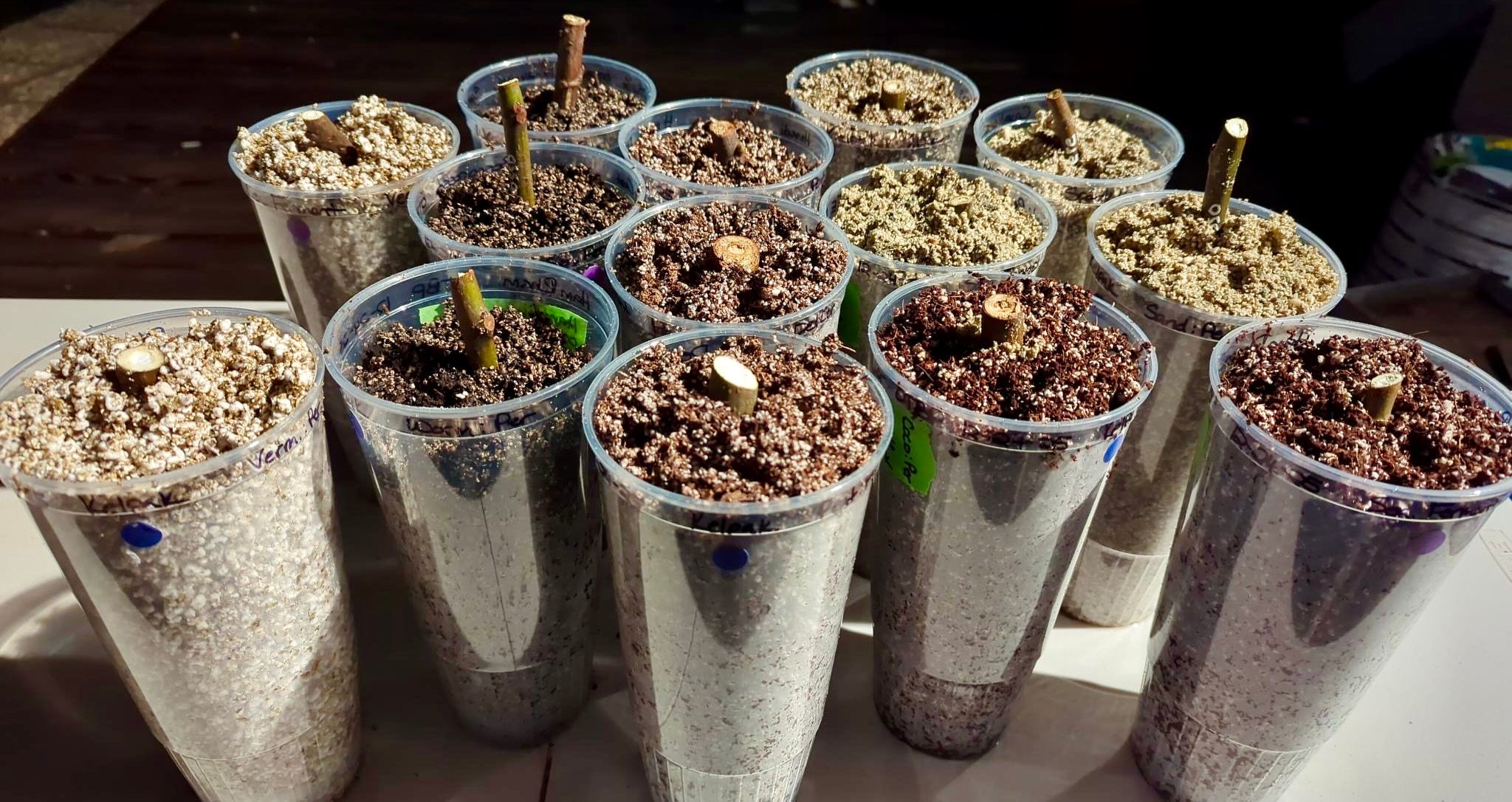
I have 25 fig cuttings from various sources. A few are of the same variety, but the majority are different. I will put 5 cuttings each into the following 50/50 combinations:
Perlite: Vermiculite
Perlite: Peat
Perlite: Coco Coir
Perlite: Sand
Perlite: Vermicompost (Worm compost, not to be confused with vermiculite)
Half will receive 1/4 cup of soft rock phosphate for the needed calcium since they all lack it and to see if it helps to improve rooting success and elongation.
But wait, there's more…
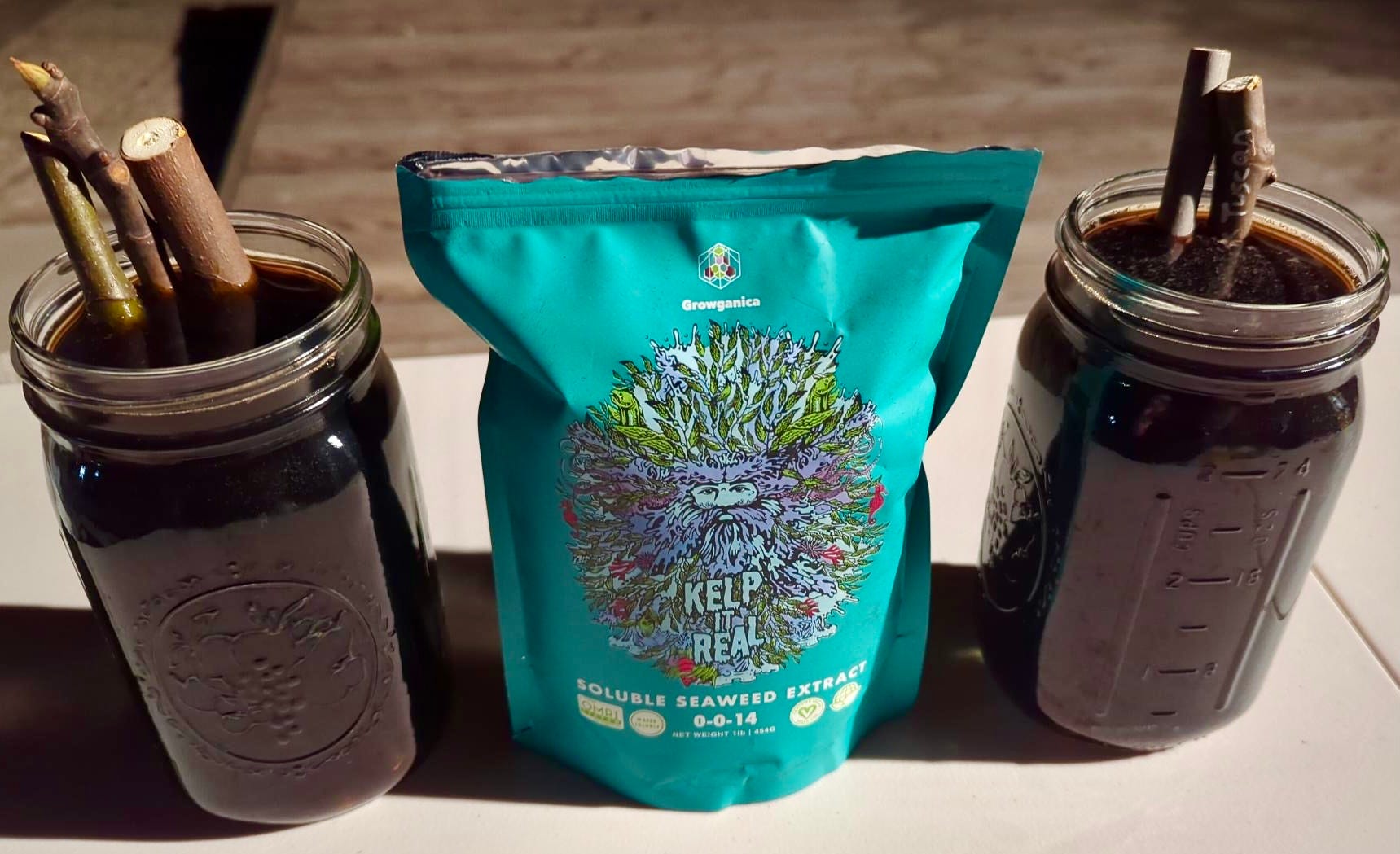
We’ve also been having some nice discussions on seaweed— how it has growth hormones and stimulants, antifungal properties, and both macro and micro nutrients. There is so much good stuff in seaweed! And, there are a lot of products on the market. Which is the better one? Obviously, a cold or gentle process for extraction is ideal when we are wanting to preserve these great aspects of seaweed. So I looked up a few products that advertise themselves as such and wanted to compare them.
Does one stimulate faster rooting? Does one cause better growth overall? Let’s find out!
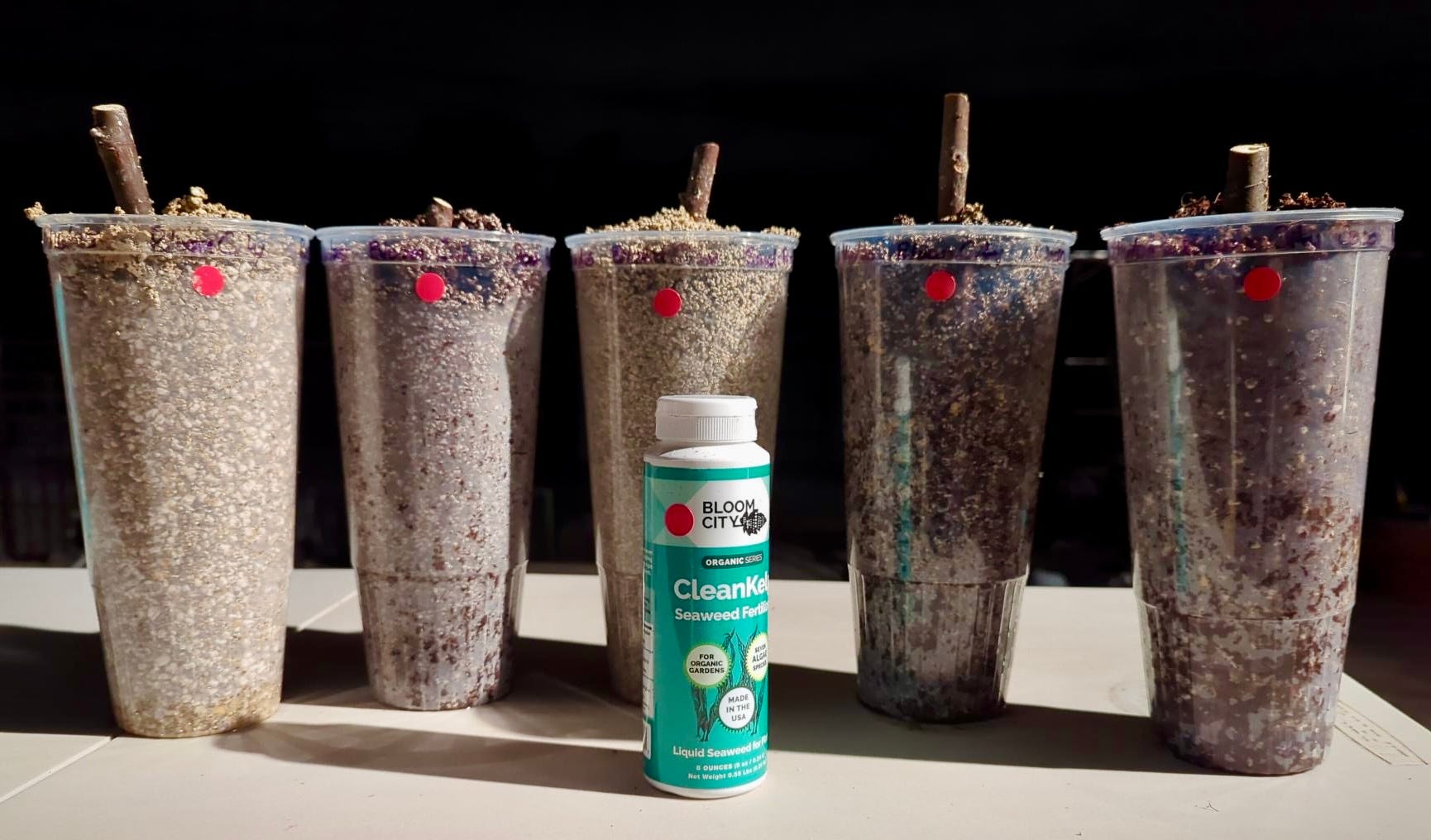
Taking one each out of the five different combos above to form a set, I will first soak the cuttings in one of the seaweed products and I will then moisten the substrate using that product in the water. For it to match the 50/50 experiment, I will fertilize with the same soaking product every other watering, or 50% of all waterings, with 50% of the recommended plant dose as the cuttings grow (or not if they croak 😜). They will get the same product the entire time until up-pot. These are the products:
Dried seaweed ferment! 😲 Remember Experiment 1? (I may not have done the update yet when this comes out, but one will be forthcoming…)
Kelpak (made from Ecklonica Maxima Kelp) This is the pricey one harder to obtain. They claim to have the highest auxin and cytokinin content of any seaweed product, and there are papers indicating it has a high rooting effect.
Bloom City Clean Kelp (made from a variety of seaweeds, including Ecklonica Maxima and Ascophyllum Nodosum) This is the moderate, easy-to-obtain one.
Kelp It Real Soluble Seaweed Powder (made from Ascophyllum Nodosum) 1 lb can make roughly 100-400 gallons. This is another moderate, easy-to-obtain choice. (Ferti-Organic may be a cheaper option if you can find it.)
But wait, there’s more… again!
This is where it really gets random. A while back ago, I was looking up analysis reports of sparkling mineral waters. I wanted a water with a specific silica content for human reasons. But as I was reading the mineral contents, I was struck by how much I felt like I was reading fertilizer analyses. I know plants like carbon too… So, I wondered if it was a thing to water plants with carbonated mineral water. Apparently, it is! One website even said it is quite common in Italy. Who knew?
The carbolic acid in sparkling water can help to make minerals available to plants. There have even been studies on it. It also influences microbial activity. There are warnings about not overdoing it, as it and the high amount of minerals can cause toxicity, like with any fertilizer. But still… my interest is piqued!
Gerolsteiner is an easily available, naturally sparkling mineral water in my area. These are the stats for it:
TDS 2,527 mg/l
ph factor 5.9
Hardness 1,299 mg/l
Nitrate 5.1 mg/l
Calcium 347 mg/l
Magnesium 108 mg/l
Sodium 119 mg/l
Potassium 10.8 mg/l
Silica 40.2 mg/l
Bicarbonate 1,817 mg/l
Sulfate 36.3 mg/l
Chloride 39.7 mg/l
I mean, it even has nitrate in it… So, I think I’ll give it a go! I am looking at that sodium number though as well as the bicarbonate and will be careful with the amount I use. I will give 1/2 of the internet recommended dose every other watering to one set of the 5 different substrates as a comparison. How do naturally occurring minerals in water compare to the minerals in seaweed? Hopefully, we’ll find out!
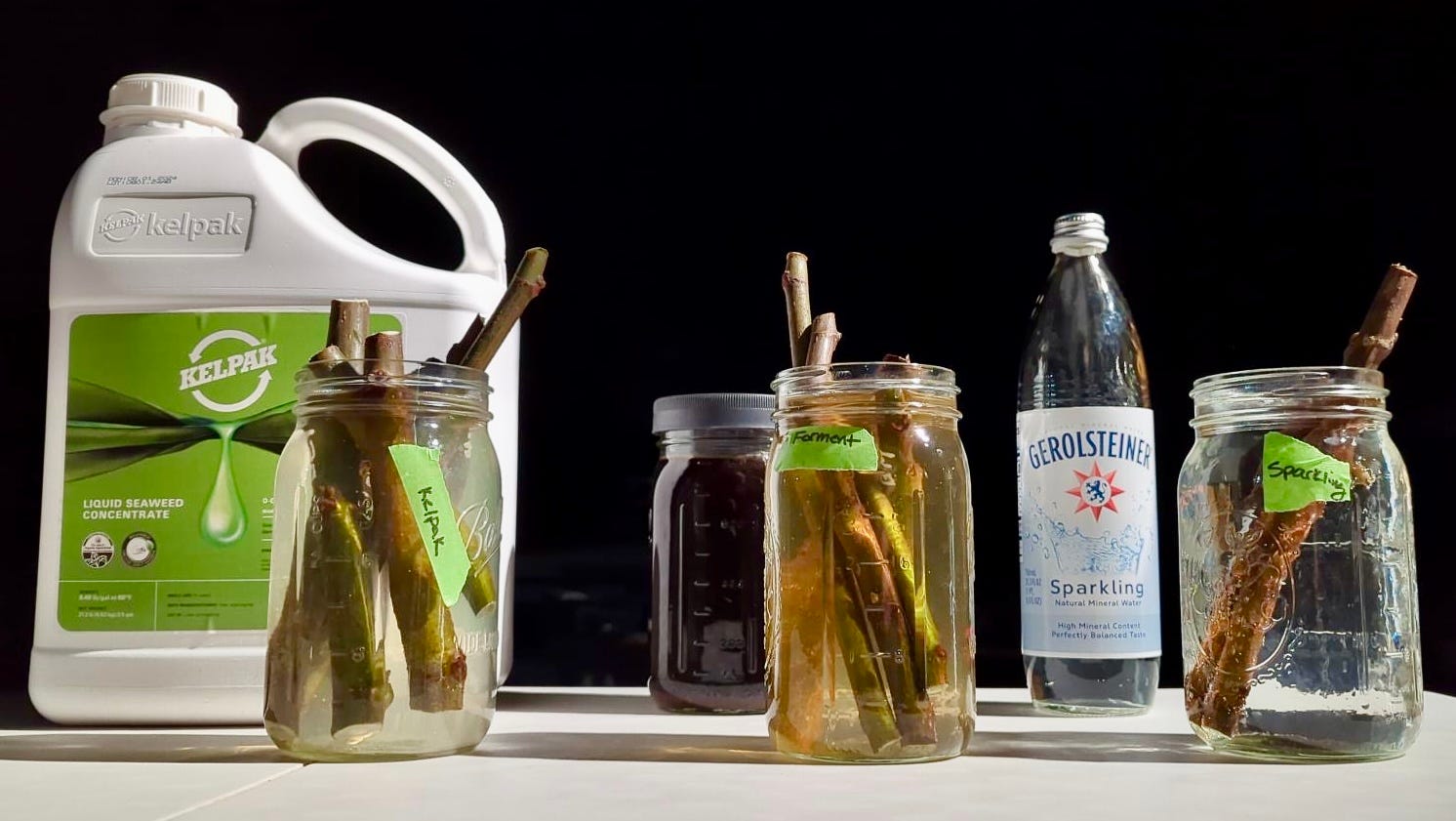
So there you have it: 50% perlite to 50% various other substrates, and 50% natural mineral fertilizers to 50% RO water. The 50/50.
Thoughts so far…
It really is kind of a smorgasbord of experiments, like a three-for-one. Talk about saving the biggest and best for last! I think that this is the one that can be of most benefit to average growers and hope to show any pros and cons to the different items that are available for rooting.
This is also a bit of a commitment and I’m feeling the responsibility of it. Normally, because these experiments are done with just myself knowing, I can let it go if I need to, because, you know, life! Hopefully, all goes smoothly though and I can share some good info at the end of it all.
This one kind of crams it all in, but it feels good to learn things that can be helpful in whittling down a world of options. Funny how just months ago I thought I wouldn’t root anything at all this winter, (which I have also said and failed at the last three winters in a row.) How things change when you get ideas! 😜
Sooo, interested in any results? …

Speaking of air… An ode to all of the cuttings out there rooting right now. (Like, literally. Giving your cuttings some air is love to them, so love IS in the air. Get it?? … Oh whatever. Enjoy and sing it loud to those rooting babies! 😉)
Well, we’re all full of bubbles and gas with this one! Which will have the best results? Any guesses???
(I’m just hoping the expensive one doesn’t win for the seaweeds, haha. This hobby is pricey enough as is! 😅)
(I feel like it also could have been called the Inception Experiment since it is an experiment within an experiment within an experiment. Or, The Russian Doll? 🤔 So many places to go with this one…)

"A while back ago, I was looking up analysis reports of sparkling mineral waters."
- because, of course you were.
We have tried straight perlite several times and it works well, but not as well as our other treatments - this was over about a dozen containers and several hundred cuttings (pure sand worked better I believe). I think we did against pure DE also and the DE won.
There are other variables of course, like the amount of water, frequency, temp, humidity, etc.. but it will be interesting to take a look at the paper you linked.