


To hormone or not to hormone? That is the question of many a new fig cutting propagationist. Technically, fig cuttings are pretty easy to root and they do just fine on their own without hormone application. But sometimes we just feel like giving them a little something extra to help them along. How can this be done organically and naturally?

I randomly came across this research paper talking about using coconut water for rooting fig cuttings. Now, this isn’t exactly new to me— I have used coconut water before as a “refreshing boost” 🍹 of sorts to my rooting cuttings. I know it has all sorts of plant benefits.
What people may not think about though is that a coconut is a giant seed and as seeds do, it contains all of the nutrients needed to germinate a coconut tree. Coconuts are full of sugars, vitamins, minerals, amino acids and phyto hormones which help in maintaining and initiating healthier growth of plants. Coconut water has the characteristics of a root hormone as it contains different plant growth regulators such as indole acetic acid (IAA), cytokinin, abscisic acid, and salicylic acid. Cytokinin is an important one for cell division and formation of shoot meristems. Its presence helps to promote rapid plant growth. It also contains natural auxins (IAA) which help in adventitious root development. Coconut water includes minerals such as potassium, sodium, calcium, phosphorus, iron, copper, sulphur and chlorides. Sugar solutions are also thought to benefit cuttings, so it’s possible the natural sugars in coconut water may help here.
Here is a nutrient label on one brand of coconut water, note the calcium, potassium, phosphorus, and magnesium:
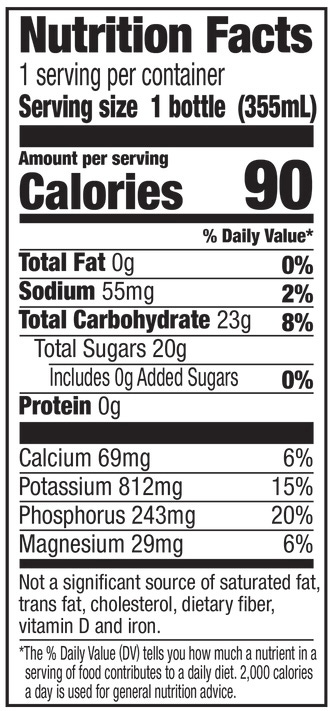
The benefits of coconut water are huge! Does it by chance remind you of any other type of plant we have talked about here that aids in stimulating growth? … Of course it does! Seaweed! Coconut has growth stimulants, seaweed has growth stimulants… aloe vera does too.
Hold up, we need to talk about aloe vera now too. This is also one that is not new to me, I have heard that it has a ton of plant benefits and can help with rooting as well because of the salicylic acid in it. I have tried it before and, at the time, didn't feel like it added that much advantage to go out of my way to use it as a rooting hormone substitute. It is noted though that Aloe vera extracts contain nutrients, vitamins, enzymes, amino acid, and sugars, as well as plants sterols, gibberellins, and salicylic acid (SA), and are associated with improvements in vegetative growth (particularly root growth). I mean, that is an advantage, is it not? It sounds like the desert’s version of seaweed in many ways.
One paper stated this—
“…the lowest number of roots per cuttings (2.3) was produced in distilled water treatment (control). Coconut water increased the number of roots in Parkia biglobosa [Dunsin et al. (2016)] and aloe vera had similar results of the increased number of roots in roots invitro condition in Populus tremula hybrid ‘Michx’ [El Sherif (2017)]. The presence of proteins, vitamins, minerals and sugars and natural hormones in aloe vera and coconut water gives the combination a higher potential to drive better growth than synthetic hormones like IBA.”
Another paper stated this—
“The application of aloe vera gel is helpful in increasing root weight of cuttings (Sahu et al., 2013). The data of olive cutting is in according to that of El-Sherif et al. (2017) observed that Aloe vera gel application can result in an increase in root weight, as it contains IAA which can act as an alternative root hormone. Table 10 shows the survival percentage of olive cuttings the survival percentage The salicylic acid (SA) concentration significantly affects the survival percentage.”
It just seems as though aloe vera needs to be revisited on my part, especially for this experiment. So here we go!
Disclaimer: This is a personal experiment and not a recommendation. Feel free to join in for your own fun, but please do not be disappointed if it does not work out as expected. This is not a tried and true method as of yet. Read and follow at your own risk!
The fourth experiment…
Natural Plant Growth Regulators
— Coconut water
— Aloe vera
— Seaweed
I have 8 cuttings, four are duplicates, the others are different varieties. I soaked two cuttings in 50% coconut water, two in 50% fresh aloe vera water, and two in the recommended dilution on a bottle of a cold extracted seaweed fertilizer (Ascophyllum nodosum). The last two cuttings were soaked in a 50/50 combination of the aloe vera and coconut water dilutions. All were soaked for approximately 24 hours. The soaking water was also used to hydrate the rooting medium of 1:1:1 peat: pumice: vermiculite.
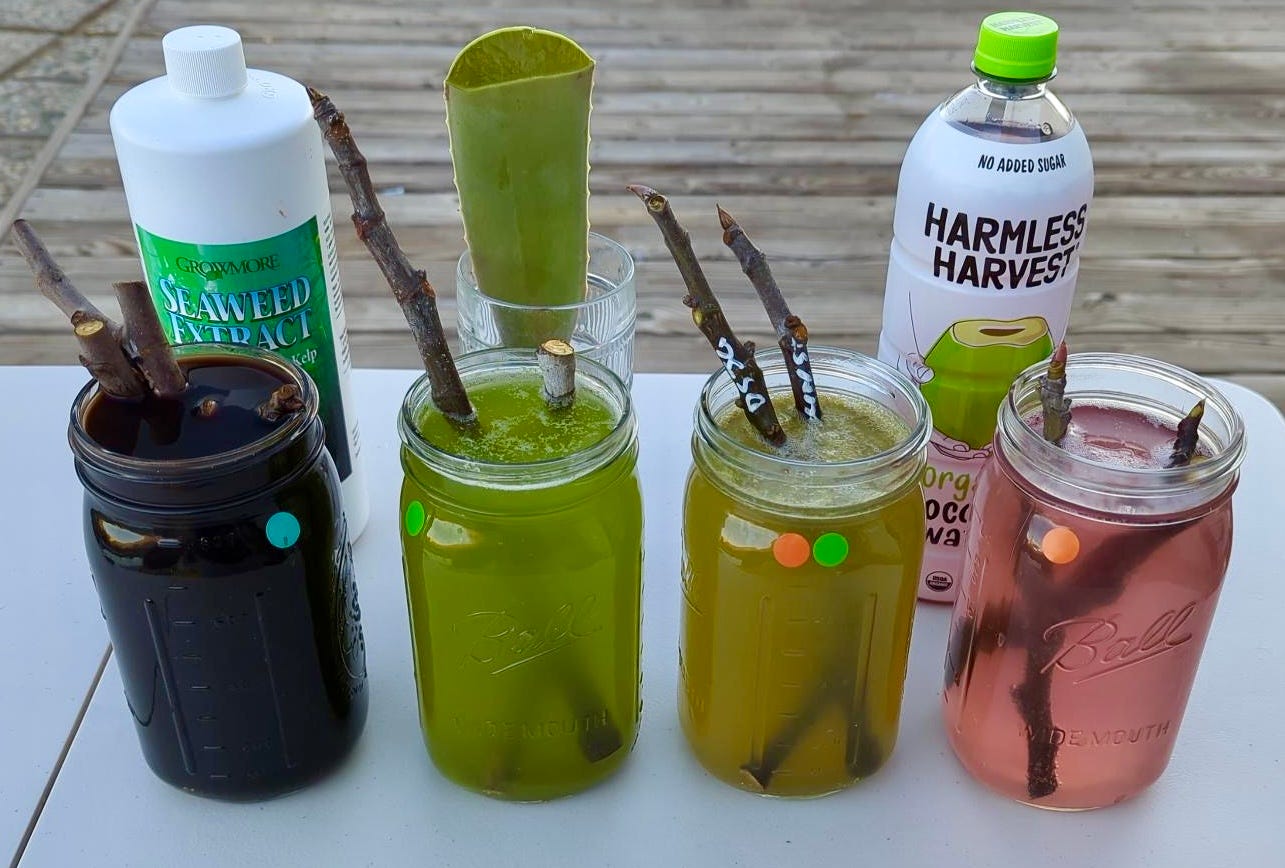
I will fertilize each successfully rooted cutting with a higher dilution of the same product they were soaked in until up-potting, with a possible exception to the fresh aloe that I may swap for bottled. (I forgot to add in soft rock phosphate with this batch of rooting mix so I may water that in later as well.)
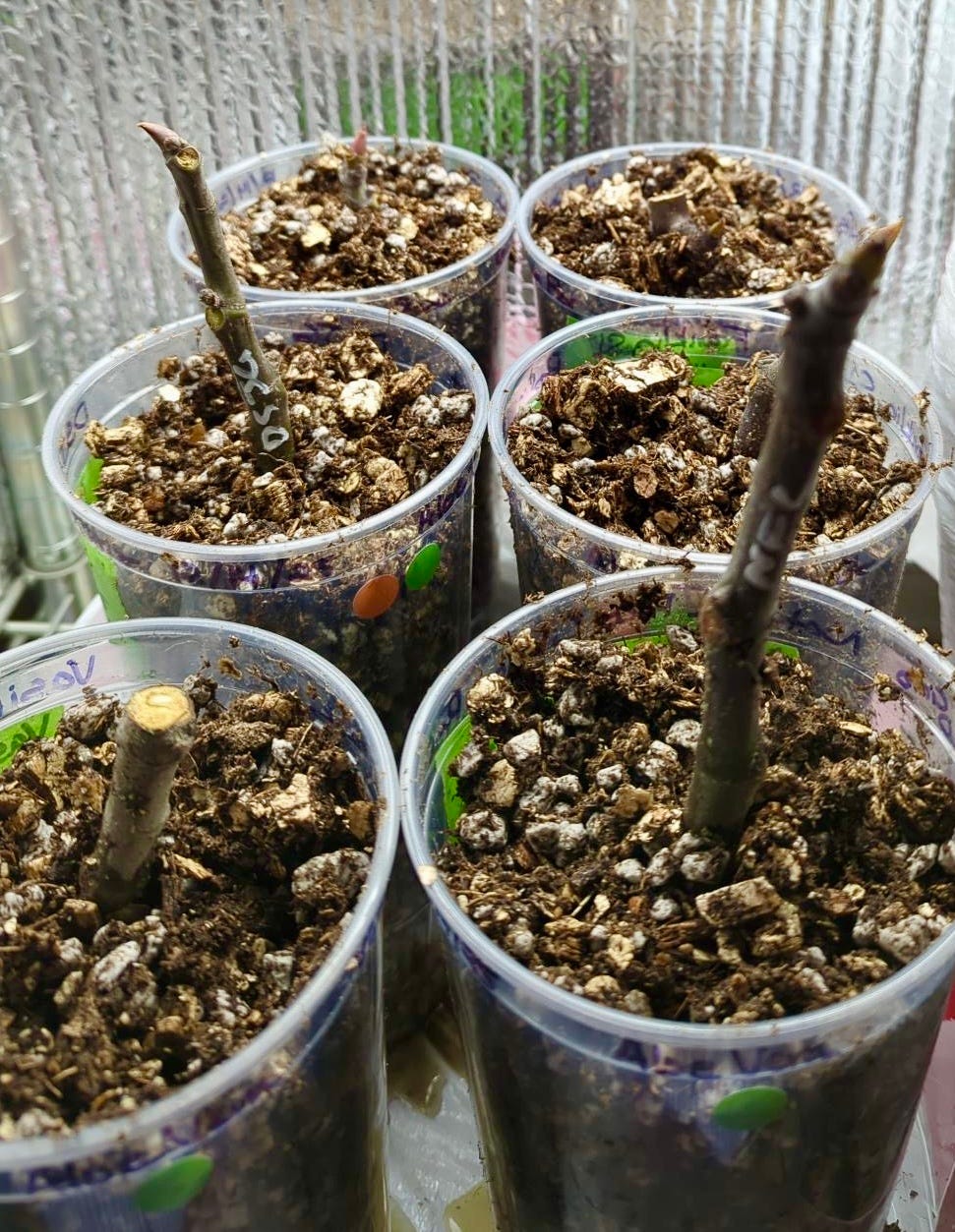
Thoughts so far…
I would have loved to have used freshly cracked open coconut water. Unfortunately, that was not available or feasible. So I tried to use the least processed one I knew of which was by Harmless Harvest.
There was an internal debate with myself as to what dilution was best for the aloe and coconut water. The paper I first read on coconut water used 20 & 30% dilutions, with the best success being with the 20% one. Another paper using a different type of plant to root had good success with a 50% dilution. I figured I would try the 50% because I know you can put straight aloe onto cuttings and the coconut water did not taste too strong or concentrated. It seemed like it could be a good comparison.
It was interesting though, I think the coconut water one and the aloe-coconut one started to ferment during the overnight soak. There were quite a few bubbles the next day. So that may be an argument for using a lower dilution, though I do not think it will harm the cuttings since I use ferments all of the time for soaking cuttings. I just know that you do not want it to develop much of a film on top as that can adversely affect them.
I am really excited to see how these do! I’m mostly excited for the coconut and aloe combo, I can’t wait to see how that one turns out. I know that you can get powdered forms of all three. I have no idea if that processing hurts the level of growth hormone in them, but certainly that may be a more convenient way of trying this out in the future if it seems worthy.
TO BE CONTINUED…

Winter Experiments Playlist— Could it be anything other than this one??
🎵 Put da fig in da coke-u-nut an call me in the morning woo wooo 🎶
What do you guys think? Will there be a difference in rooting? Will the cuttings mold? Which will root first?? Will any rot?? Are you on the edge of your seat, biting your nails in anticipation??? How will you find out the results????
I love what you are doing. And I love being part of your audience. I don’t know if you are also posting this stuff on any forums…I kinda like the concept of keeping it “semi-private” for your subscribers…only because too many cooks spoil the broth. Of course you should share proven helpful ideas with all growers.
Good experiment. I never thought to use coconut water before. I have tried using willow water before and it seemed to work well. I soaked some willow branches in water for a couple days and then used that water to dampen my peat moss and pumice soil mix for rooting cuttings. I believe willow water has some natural rooting hormones in it too.