


Ever since I got into rooting fig cuttings, I got into experimenting. I’m always trying different things, new methods, new rooting mix combos, new fertilizers, rooting hormone type things, and on and on. Normally, I don’t really share it or document what I’m doing as it’s been mostly for my own personal satisfaction and knowledge. But now I have this newsletter here, so I thought I might share some of the stuff I’m doing with you all. Not sure if this is your thing, but hey, we’ll give it a go!

Disclaimer: This is a personal experiment and not a recommendation. Feel free to join in for your own fun, but please do not be disappointed if it does not work out as expected. This is not a tried and true method as of yet. Read and follow at your own risk!
The first experiment…
Dried Seaweed Ferment
Okay, you guys already know — I’ve got a thing for fermentations. Plants love them, nutrients and microbes are at the ready. They are just soo… GOOD!
What motivated this experiment was a post on a forum where someone had a fig cutting that had rooted but had no top growth. I was thinking the whole time I was reading about it, it’s too bad she doesn't have a seaweed ferment. It would give growth hormone and nutrients ready to be utilized by the baby plant. And of course it hits me, I don’t have a seaweed ferment either!
Now, I live in California which is technically a coastal state, but I live like 1.5 hours away from the beach depending on traffic. So I’m not at the beach all of the time and I don’t know the good seaweed spots, traffic is a pain, [insert more excuses here]… I just didn't want to get some fresh seaweed. So my friend has a lot of dried seaweed she doesn't want to use, and this was perfect! Let’s try making a ferment using dried seaweed to see how it goes!
→ You can make a fermentation using FPJ, JLF, or FPE methods with any FRESH from the beach seaweed or fresh freshwater algae-type plants. I recommend doing one of these if you wish for a guaranteed method. ←
I also have never made a plant fermentation using molasses before. It seems perfect to combine two of my favorite inputs for trace minerals and potassium together into one ferment. YouTube becomes my friend here and before I know it, I have a recipe to use! The process is technically for fresh seaweed, as ferments typically go, but because it uses water already, I feel safe using it for dried seaweed.
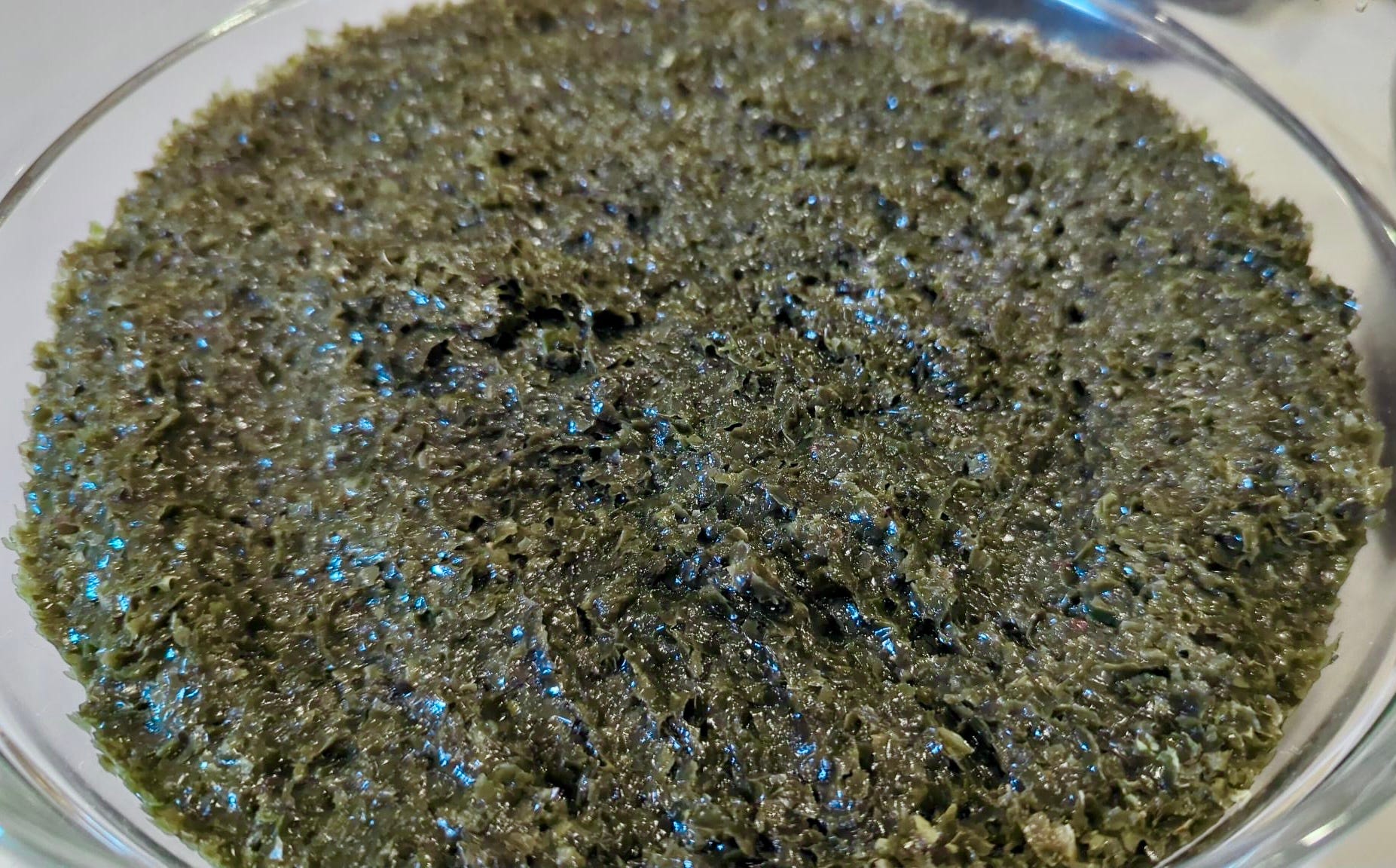
Here is how it goes…
The original recipe:
10 kg (22 lbs.) fresh from the ocean seaweed, rinsed & chopped up
1.75 kg (3.86 lbs.) blackstrap molasses
— Mix the two well until moisture releases from the seaweed by massaging with your hands.
Add 2 liters of water
This is all combined well and put into an appropriately sized food-safe (non-metal) receptacle, covered tightly with a breathable cloth and allowed to ferment for 1 month. Any solids are then strained out and the remaining liquid is used diluted for fertilizing. The solids can be composted or buried in your garden beds.
How I modified it:
Since I did not have fresh seaweed, I used 4 lbs of dried seaweed flakes. I first rehydrated them by covering them with RO water. I topped off the water a couple of times until it didn't absorb anymore. I tried to keep it exact so that it would mimic fresh seaweed and did not want it swimming in excess water. My 4 lbs dried turned into about 22 lbs rehydrated, which was 10.05 kg. I wasn't expecting it to work out to the exact amount, but had an idea because a quick internet search said that dried seaweed could absorb water 5-10 times its weight.
I stirred it well with the molasses but did not massage it in because it was already flaked and I wasn't trying to extract the moisture from the rehydrated seaweed.
My gut told me to add in an inoculant since we aren’t dealing with fresh plant material, so I mixed in 1 tablespoon of EM-1 as well.
All of this fit into a 5-gallon bucket.
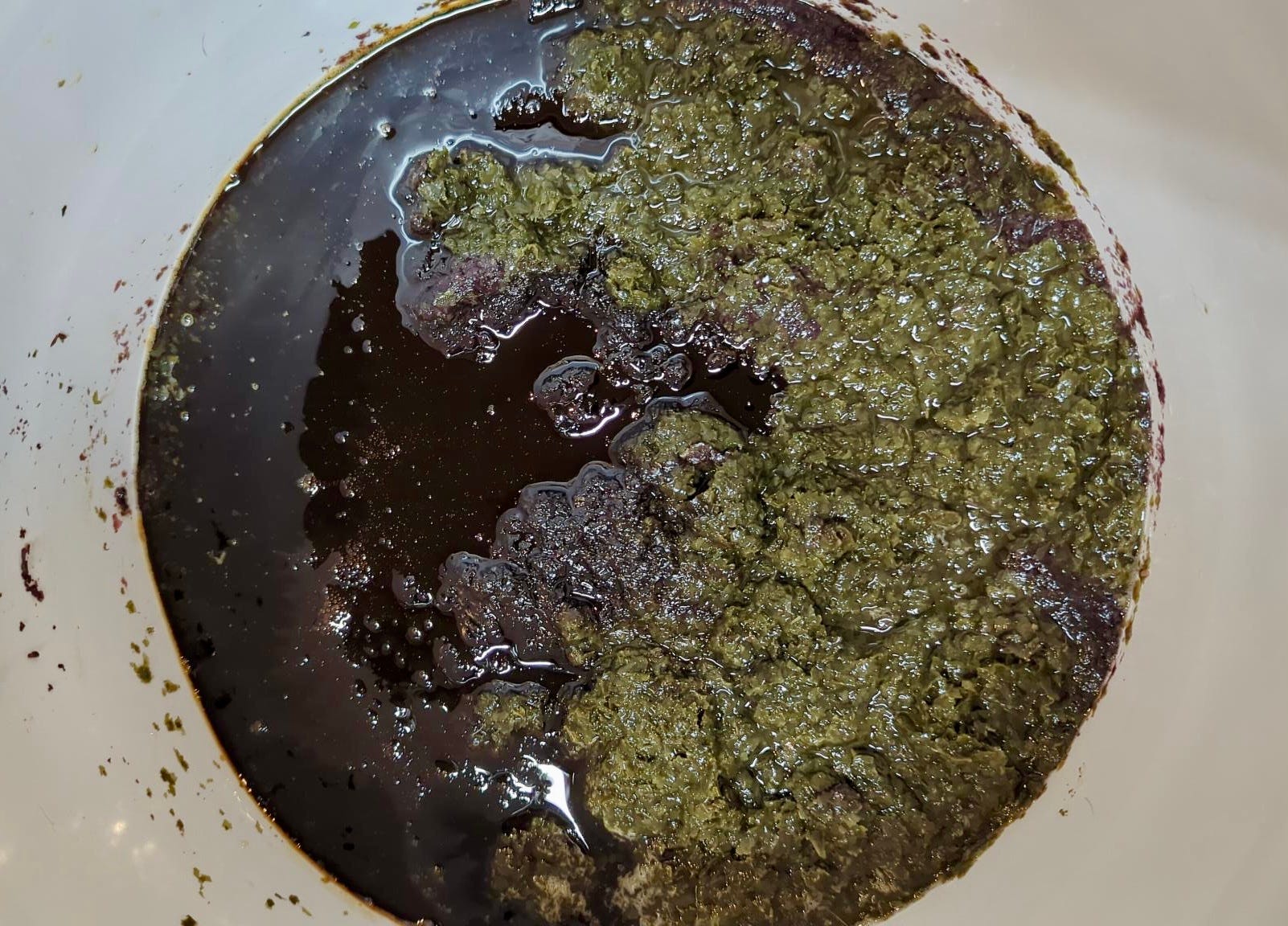
The seaweed I used was 1 lb each of:
Irish Moss flakes (iron, calcium, potassium, magnesium, trace minerals)
Sea Lettuce flakes (one of the highest in calcium, plus iron, potassium, and magnesium)
Rockweed granules (Ascophyllum nodosum, fucoidan and alginic acid, manganese, and magnesium)
Laver granules (iron, magnesium, manganese, and zinc)
I’m really excited about the sea lettuce! The calcium content should be very helpful to rooted cuttings. And of course, rockweed is the most commonly used seaweed for fertilizer and is well-known for its root growth promoting properties as well as helping to stimulate vegetative growth. I figure this is all going to be high in iron also and should have some decent non-toxic manganese content.
Do you want to use dried seaweed for your plants too?
This could easily be done on a smaller scale than the above ratios.
For example:
8 oz of dried seaweed, not toasted or smoked, broken into pieces (or use flaked seaweed) and rehydrated for a few hours to 2.5 lbs (approximately, depends on the type of seaweed.)
7 oz of blackstrap molasses
7.5 oz of RO or distilled water
(Hint, hint… Any takers to try it?? 🤓)
There are a lot of places to get dried seaweed, here are a few: Asian markets, health food stores, Heritage Seaweed, Ironbound Island Seaweed, Vitamin Sea Seaweed, or Maine Coast Sea Vegetables. The main thing is to get plain seaweed that is not cooked, smoked, or seasoned in any way. Rinsing is optional; some say yes to remove any excess salt, others say no because you are removing minerals and perhaps beneficial microbes as well. I’m on the fence with it and did not rinse mine, though I would have if I had seen any salt buildup on the dried seaweed.
You can also make a fresh tea with dried seaweed and water your plants with it if you are not into fermenting. Just take a portion of dried seaweed, rehydrate it for about 15-30 minutes with fresh water to cover, and then purée it all in a blender or food processor, add the purée to about 16 times* more fresh water and let sit to brew overnight (minimum 5 hours, maximum 24 hours.) The finer the purée and the longer the brew time, the more nutrients that are extracted. Strain out and save the liquid and either discard or compost the solids. Water your plants with the reserved liquid. Refrigerate any unused tea and use within 3-5 days, let it warm up at room temperature to take the chill off before use.
*For example, one cup of puréed seaweed to 16 cups (1 gallon) of water; or one tablespoon of purée to 16 tablespoons (1 cup) of water.
You can also make a tea using granular kelp fertilizer. Add the granules to about 16 times more water (room temperature) and let brew 24-48 hours, then strain and use the liquid.
Thoughts so far…
I don’t recommend trying the ferment with powdered seaweed. I don’t think that would work well in a ferment like this. This initial experiment was with flaked seaweed, but I’m already anticipating it being a pain to strain with the large amount I used. I’m secretly hoping some of it dissolves during the fermentation process. I also have some whole dried seaweed pieces, and I may attempt this again using those just for ease in separating out the solids. It’s a pros and cons situation with having more surface area for extraction or ease in separating. A nice compromise may be a longer ferment time with larger pieces.
My initial concerns are for any potential mold growth and whether the EM-1 will be enough to stop it. Usually, fresh, unwashed plant material is used, in part, because of the bacteria and yeasts that are naturally on them which assist in the fermentation and the live enzymes in them which assist in breaking down the material. I think we’ll be alright as is, but time will tell.
I’m also wondering if I’ll end up needing to add more water during the process. I’ll check it periodically to make sure it doesn't become a solid mass in the bucket.
I’m excited to see how fermenting it increases any enzymatic activity. I already use powdered soluble seaweed for fertilizing, but dried and powdered things sometimes lack the oomph of something fresh. I think this can make a nice, happy in-between product for use. If it turns out well, I may submit it for a nutrient analysis. “May” being the keyword, haha. 😜
TO BE CONTINUED…

I haven’t done this in a while… Winter Experiments Playlist first song!
(Nooo, I was not humming this while mixing the above concoction... 😏 Is it SOO 2021???)
How will the ferment turn out?? Will it be a moldy mess??? Will it be used??! Will plants die???!! Only one way to find out, friends… See you in the next one!

Great experiment, I think it will work. I also have a winter experiment going where I am burying cuttings in a shallow hole by my mature fig tree for several days to let the microbes inoculate the cutting prior to rooting it. I will compare this to sterilized/washed cuttings.
I'm 99.9% sure your experiment will be successful. Been using fresh seaweed for years around base of plants and steeped in rainwater over the Winter; and applied in the Spring w/incredible growth and production. There is inherent goodness in seaweed :-). Good luck and look forward to your discoveries... and as an "Olde Sailor", back at'ya:
https://www.youtube.com/watch?v=zw0FZs_J2IE