


Apparently, this is the season for amino acids! Last year, it was calcium; and right now, it is all about the amino acids and how they benefit our plants! I wrote a lot about the benefits of amino acids in the Egg Amino Acid article. To recap, amino acids give these benefits:
Increases photosynthetic activity
Increases enzymatic activity
Helps with hormone production
Reduces disease and insect pressure
Increases fruit & blossom yield
Increases terpenes, secondary metabolites, and flavonoids
More root growth
Helps increase uptake of other nutrients, such as calcium
Improves soil quality
Can be a nitrogen source
That’s a lot of benefit! So are you using them yet?? I bet you are because you’re here! 😉
We already know we can obtain a large amount of amino acids from fish, ruminant meat, and eggs. They are also in the whey from lactic acid bacterial serum (LABS) if you happen to make that for your garden. Can we make it from anything else? Yes, beans! In actuality, many of the commercial amino acid products are derived from soybeans, so this isn’t anything new per se. However, it is nice to make it yourself so that you know exactly what is in it. Plus, this way it is alive from the fermentation, it’s full of enzymes and beneficial bacteria that are just not in the dried, dead commercial powders. This is a live amino acid food for the soil and for the plants.
Bean amino acids also come in handy if you happen to be vegan or prefer not to use animal products in your growing. Beans usually are cheap to come by, last for many years, and are readily available so they have advantages for anyone with access to them.
Okay then, what beans to use for Bean Amino Acids (BAA)? This can be made with any fresh or dried bean, legume, pulse, or grain. (Yes, I know some of these are technically not beans. But the same process can be used with each of them for a similar purpose, hence, I am lumping them together here.) Each one has its own nutrient profile and will provide benefits in some capacity. However, being that we’re talking amino acids here, soybeans have the highest amount of protein and so are a good choice. This is followed in order of protein quantity by lentils, kidney beans, navy beans, black beans, pinto beans, and chickpeas (aka garbanzo beans,) to list the most commonly available beans. I do highly recommend organic products for this as both beans and grains are often contaminated with glyphosate because it is used as a dessicant for harvesting. And if it’s not glyphosate, it’s often a different herbicide used for the same purpose. That residue does not wash off, it is inside of the bean or grain and may affect how well this ferments since they are often classified as antibiotics. As such, please use organic for the best results.
So let's talk nutrient values. I don’t have lab results at this time for what is in BAA. I’m still fermenting my first batch truth be told. However, this is the nutritional value of one cup of raw soybean seeds:
67.87 grams of protein
515.22 mg of calcium
29.20 mg of iron
3342 mg of potassium
3.08 mg of copper
520.80 mg of magnesium
4.682 mg of manganese
1309.44 mg of phosphorus
33.11 mcg of selenium
9.10 mg of zinc
This is the amino acid breakdown:
Alanine (4.41%)
Arginine (7.30%)
Aspartic acid (11.88%)
Cystine (1.53%)
Glutamic acid (18.34%)
Glycine (4.41%)
Histidine (2.55%)
Isoleucine (4.58%)
Leucine (7.72%)
Lysine (6.28%)
Methionine (1.27%)
Phenylalanine (4.92%)
Proline (5.52%)
Serine (5.52%)
Threonine (4.07%)
Tryptophan (1.36%)
Tyrosine (3.57%)
Valine (4.75%)
There is a lot of potential there with plenty of good things! What do we know about some of these amino acids?
Amino acids like glycine and glutamic acid help plants absorb nutrients by forming chelates, which protect minerals from reacting with other substances in the soil, making them more available for uptake. These amino acids also stimulate root cells to open up ion channels, allowing plants to absorb calcium and other essential nutrients more efficiently.
Glycine- Acts as a chelating agent, enhancing mineral uptake. Supports the synthesis of proteins and enzymes.
Glutamic Acid- Stimulates root growth and enhances nutrient absorption. Involved in the synthesis of plant hormones.
Proline- Helps plants cope with stress by maintaining osmotic balance. Protects against oxidative damage during adverse conditions.
Arginine- Promotes flowering and fruit set by influencing hormonal balance. Enhances plant resistance to diseases.
Aspartic Acid- Supports the synthesis of proteins and enzymes essential for growth. Aids in nitrogen metabolism, improving overall plant health.
(Here is one paper breaking down more of the benefits and effects of individual amino acids on plants in case you would like to read more.)
I see all of those beneficial amino acids in soybeans and I’m really curious how the trees will respond to BAA. Of course, nutrients will vary depending on the type of bean used and whether it was processed in any way first, such as with split beans or flours.
Beans and “Antinutrients”
I wanted to address this before anyone asks, antinutrients have become a keyword amongst some groups of people for human nutrition. It is a complicated subject that I definitely have a personal opinion on, but I won’t get into it here as this site is about fig growing and not human nutrition or diets. Figs are fun, arguing about human diets is not! Suffice it to say, antinutrients are not a concern for this purpose as there are multiple studies showing fermentation greatly reduces them while improving nutrient availability. (Here is one such study showing a 96-99% reduction.) If it is a subject that concerns you, I highly recommend searching antinutrients and fermentation on Google Scholar which will bring up studies and papers related to that subject. I’m certain that will help to put your mind at ease so you can proceed without worry!
How to make Bean Amino Acids?
This is technically a new process to me just like the Egg Amino Acids, so we will learn together! There are several versions of this on YouTube, but they all basically boil down to soaking your beans for at least two days until soft enough to squeeze slightly, blending them up with the soaking water into a paste, pouring that into a bucket with additional water, and adding dark jaggery. Cover and let sit in a shady area for anywhere between 10-21 days, the shorter time for when in summer heat and the longer time when in cooler weather. Strain out the liquid after the fermentation time is complete and use it diluted in your garden. The solids can be mixed into garden beds or compost. Some versions also use bean flours as an alternative to whole dried beans, (the soaking and blending step can be skipped if using flour, though you may need to add additional water.)
It does not seem to require an inoculant and will be fine without one. However, a little EM-1 or a spoonful of another lactic acid ferment can be added if desired to give a boost to the fermentation.
STEP 1
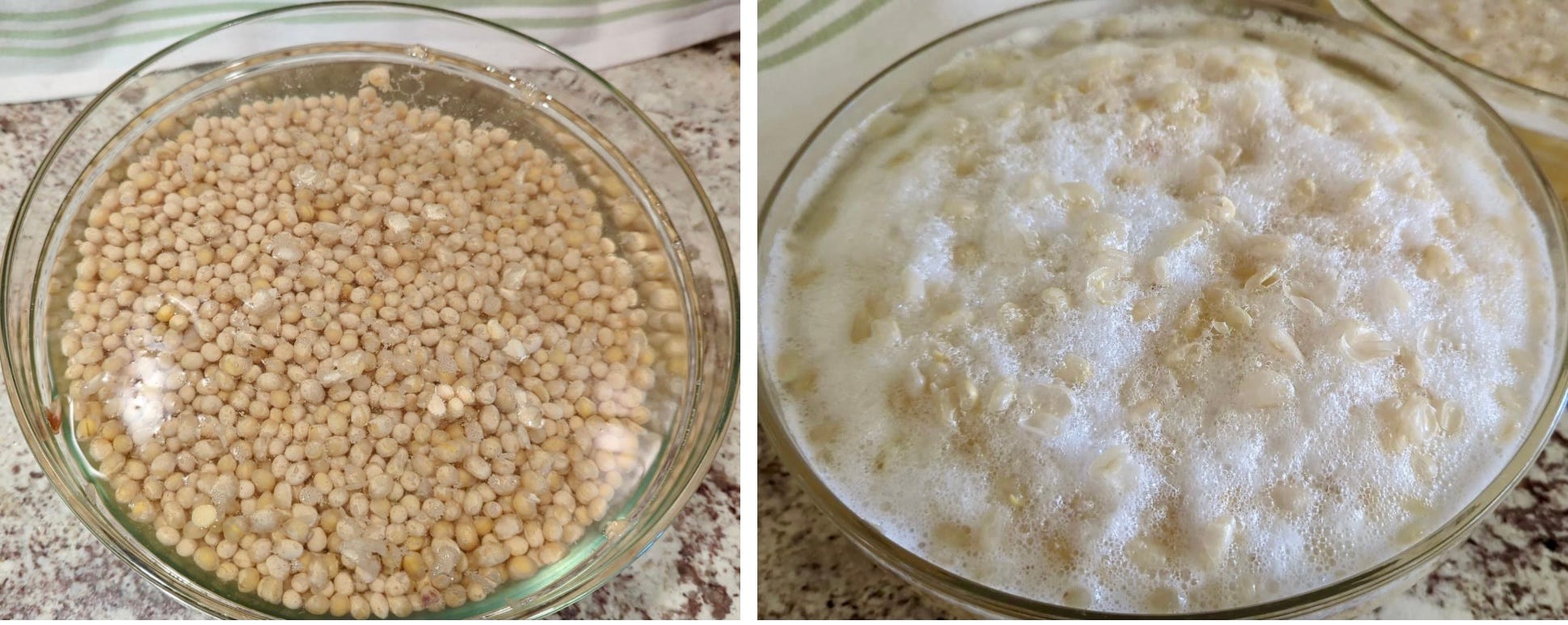
Take 2 lbs. of dried beans, cover with water, and soak for 2 days or until softened enough to squeeze a bit.
STEP 2
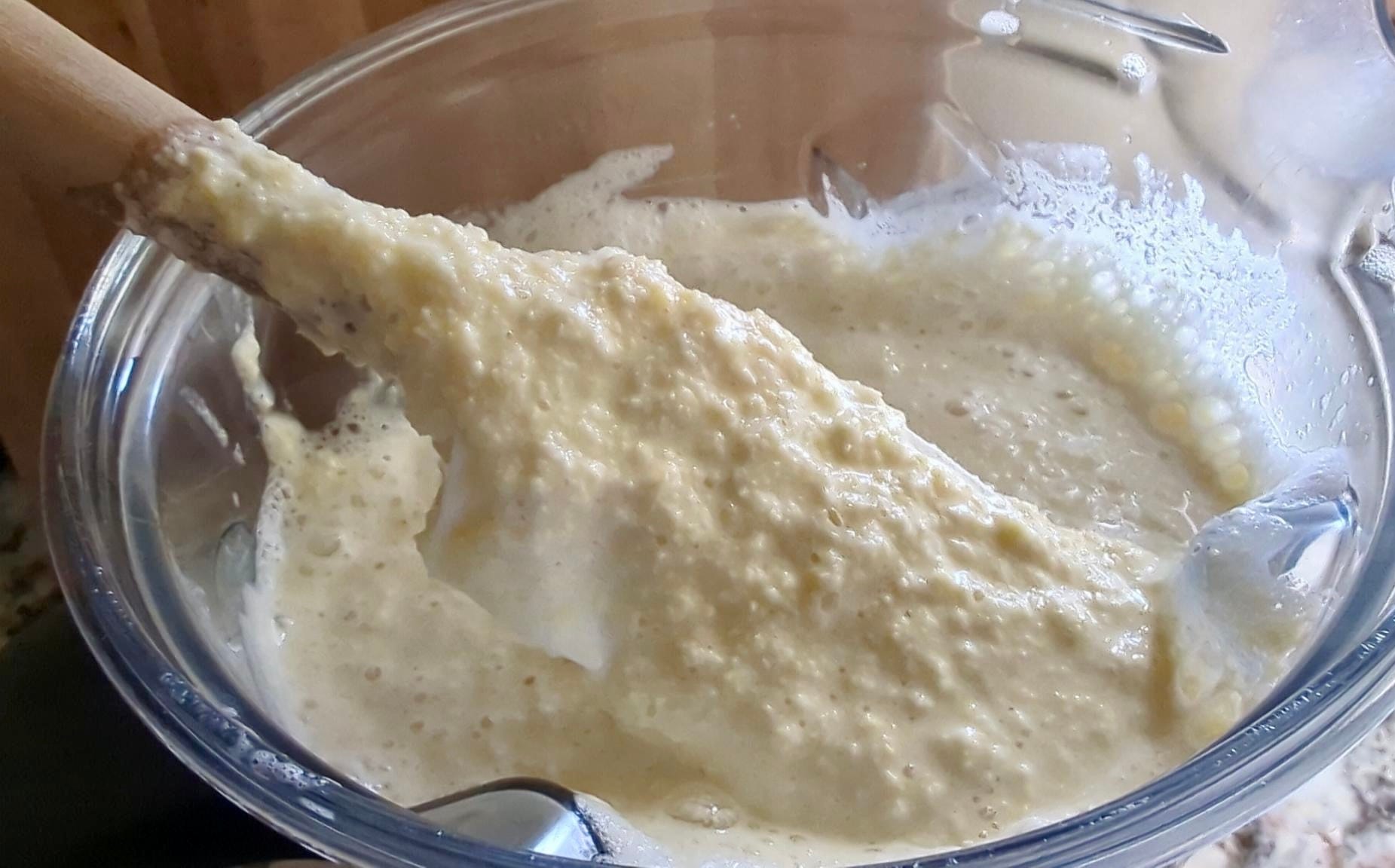
Blend the soaked beans with the soaking liquid until a milky paste forms. (You may need to do this in batches depending on how much your blending container holds.) It doesn’t have to be perfectly smooth, but broken down enough that the amino acids can be extracted.
STEP 3
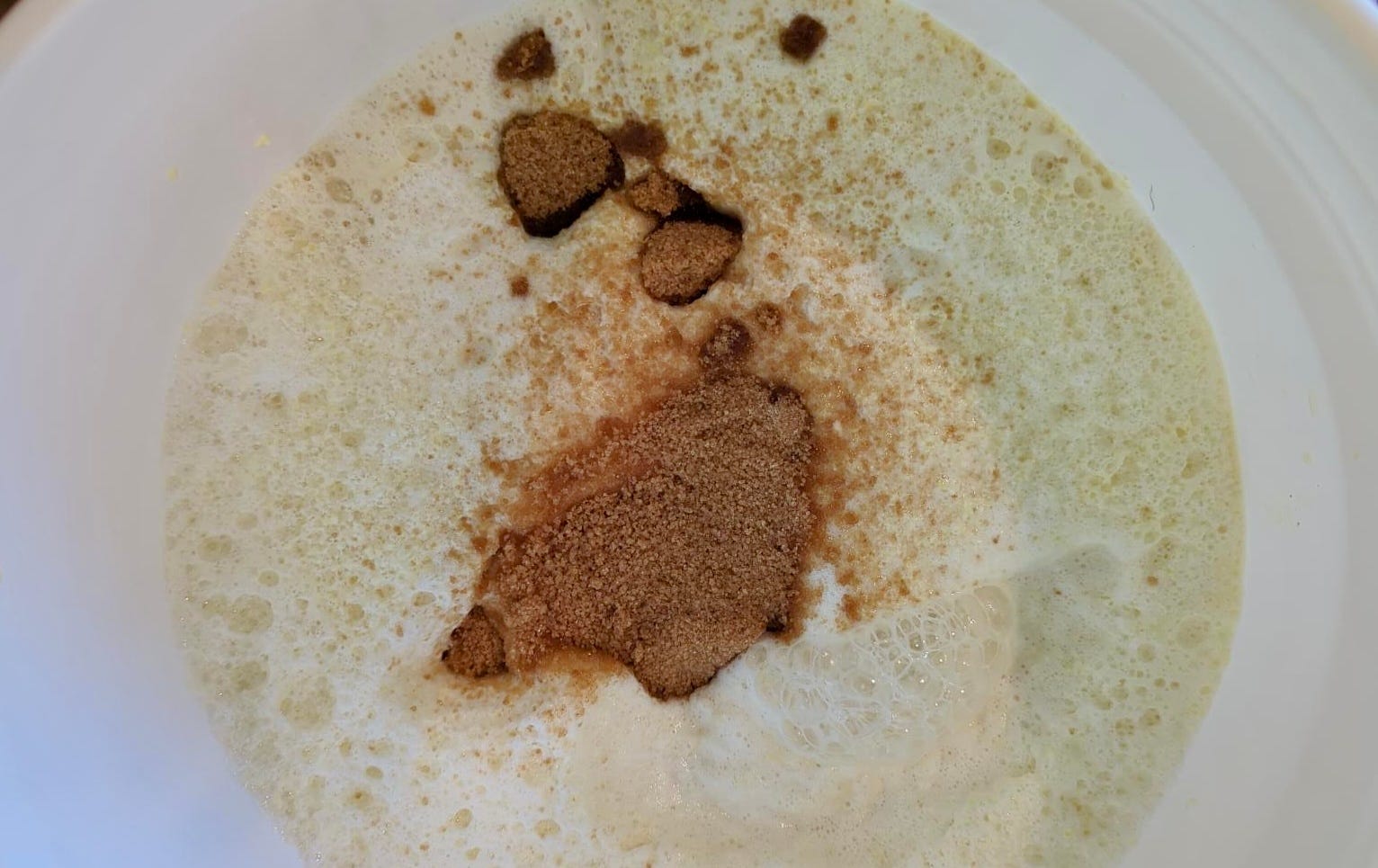
Add the bean paste into a bucket (or other container to ferment in) along with 1 lb. of unrefined cane sugar, (such as plain jaggery, dark brown sugar, panela, muscovado, sucanat, or blackstrap molasses,) and 1 gallon of good water.
Mix everything together well.
STEP 4
Cover the bucket with a lid and stick it in a shady spot to ferment for up to 21 days. Stir each day to get anything that has settled on the bottom back into the mix and to prevent mold formation on top.
It ferments faster in warmer weather and slower in cool weather. The average is between 10-21 days and it should smell fermented when done. It may also change in color, especially if light colored beans were used. It sometimes turns a wine color, perhaps from the sugar.
STEP 5
After a minimum of 10 days, strain out the solids and save the liquid in a closed container to fertilize with. The solids can be mixed into garden beds or added to compost if desired.
DILUTION RATES
Dilute the reserved bean liquid (BAA) at 3-4ml to 1 liter of water, or 3/4 teaspoon to 1 quart of water. This can be used in foliar sprays or soil drenches.
This is a very forgiving product and the dilution can be adjusted to suit your needs. As with all things, apply a low amount at first and see how your plants react. Raise or lower the dilution according to what you observe.
Easy enough to make, right? It seems to be worth a try! So, I’ll give it a go and will update what I think of it later on! After all, the musicality of these fruits are the songs my tastebuds will sing from eating good figs since, thank goodness, fig trees don’t toot from oligosaccharides unlike humans! Can we talk beans without a fart joke? It was going so well… 🤪
This article is to give another option to those looking to move away from commercial, chemical inputs or to save on costs. It’s also for those just wanting to give a little boost to their gardens. Self-sufficiency is what it’s all about and I hope it helps!
Love all this good info! And the printable card!!